

Hook
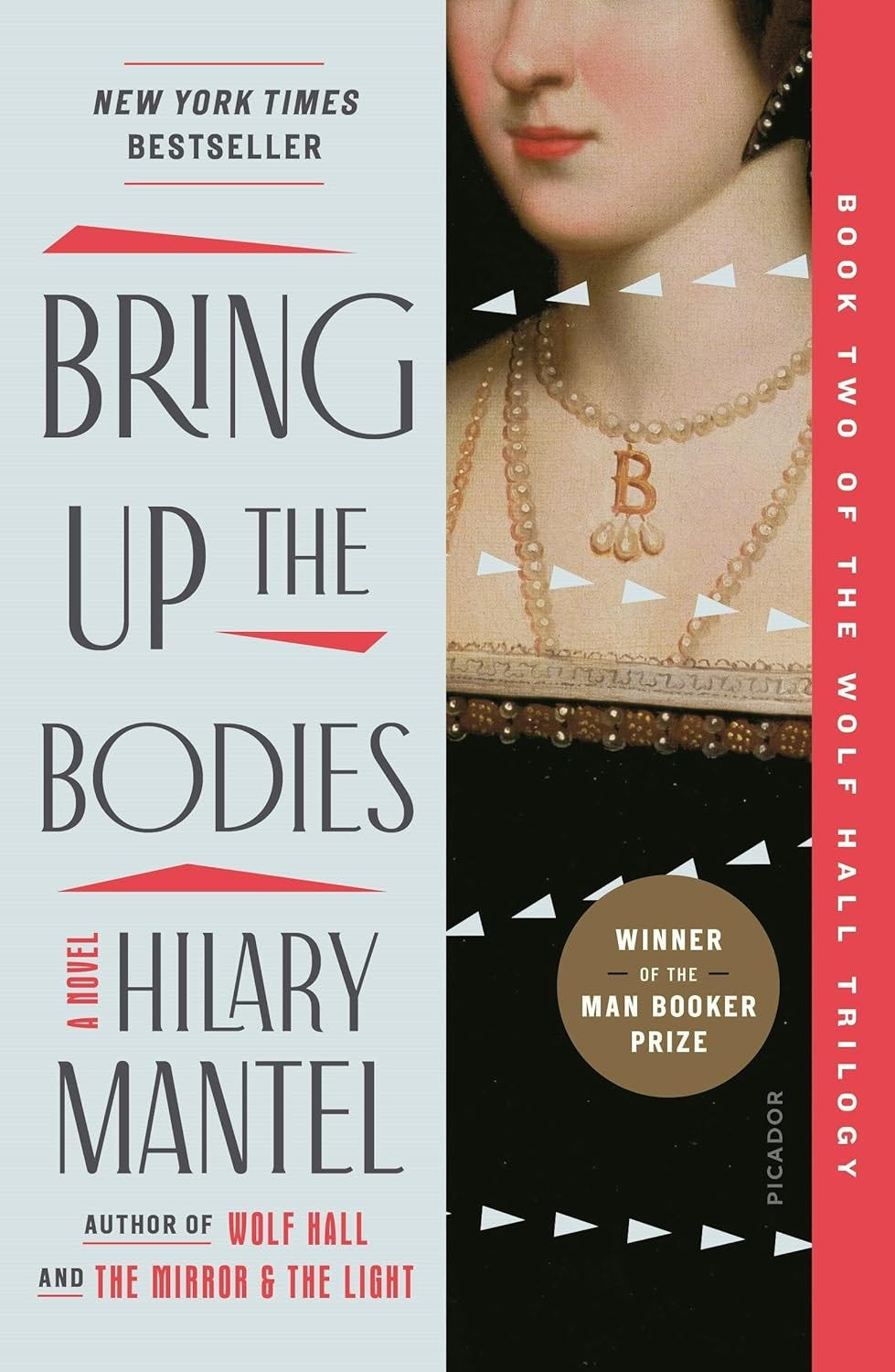
In the 1500s, Queen Anne Boleyn failed to bear a son for King Henry VIII to secure the succession to the throne of England. As a result, the king is out of love with her. He now loves Jane Seymour, and he cannot have her unless Anne is removed. Since Anne will not go quietly, Henry instructed his councilor Thomas Cromwell to push her out. Cromwell wants to gratify the king a new bride. And it will not be long; even if it turns out to be bloody!
Book Summary
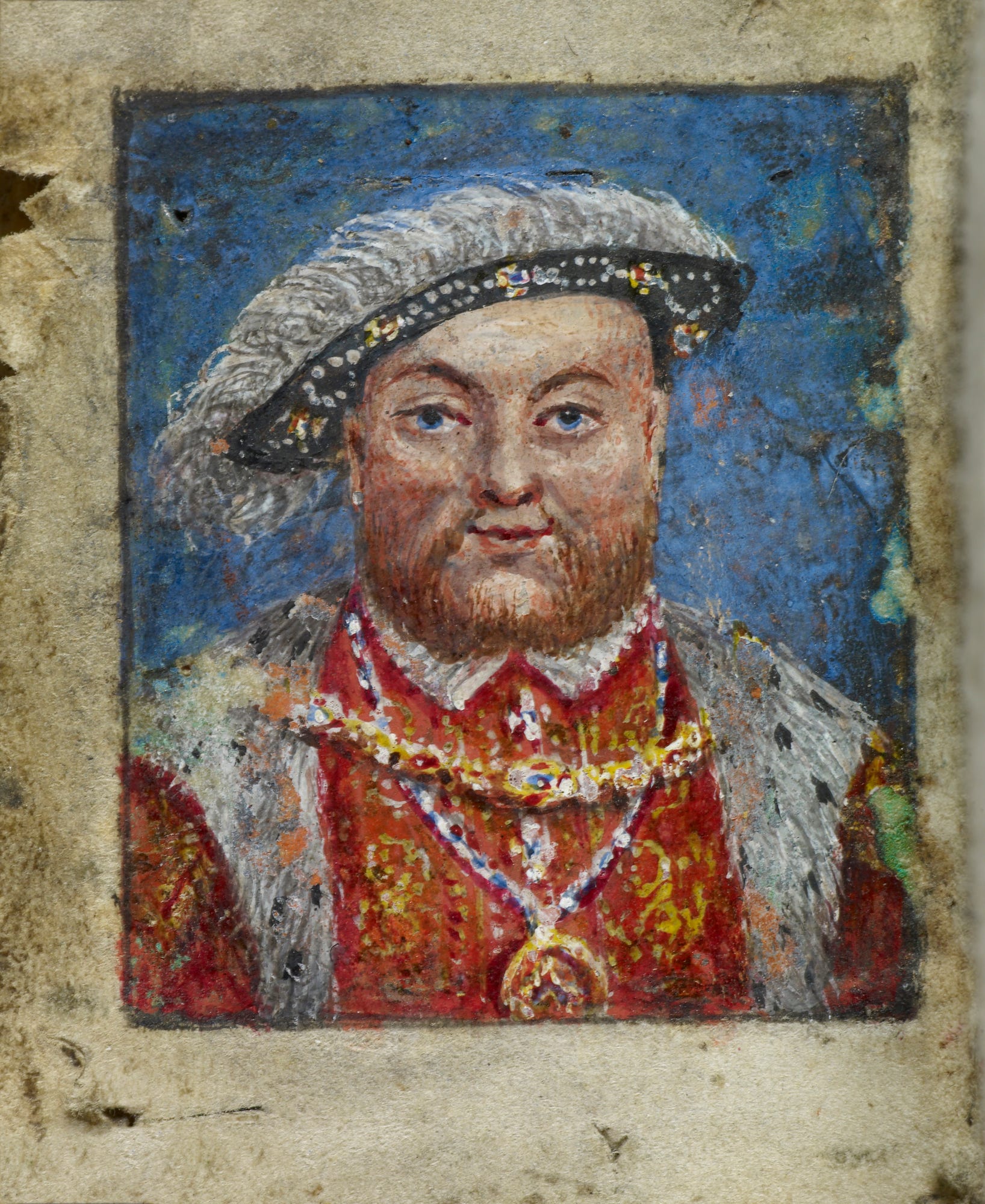
King Henry VIII – Source British Library
A kingly hunting party
It is summer in 1535. The king is now married to Anne Boleyn. The former queen Katherine of Aragon now demoted to Dowager of Wales, is ailing and under house arrest with her daughter Mary. King Henry VIII and his buddies are hunting up-county. Every household up-country strives to put forward its best show for the king: panic-stricken plastering, speedy stonework, display of the Tudor rose. They search out and obliterate any trace of Katherine, smashing with hammers the pomegranates of Aragon. If there is no time for carving – the falcon of Anne Boleyn is crudely painted up on hatchments.
Who is Thomas Cromwell? Son of a dubious low-born blacksmith who came out of nowhere to ascend to the post of Master Secretary of England:
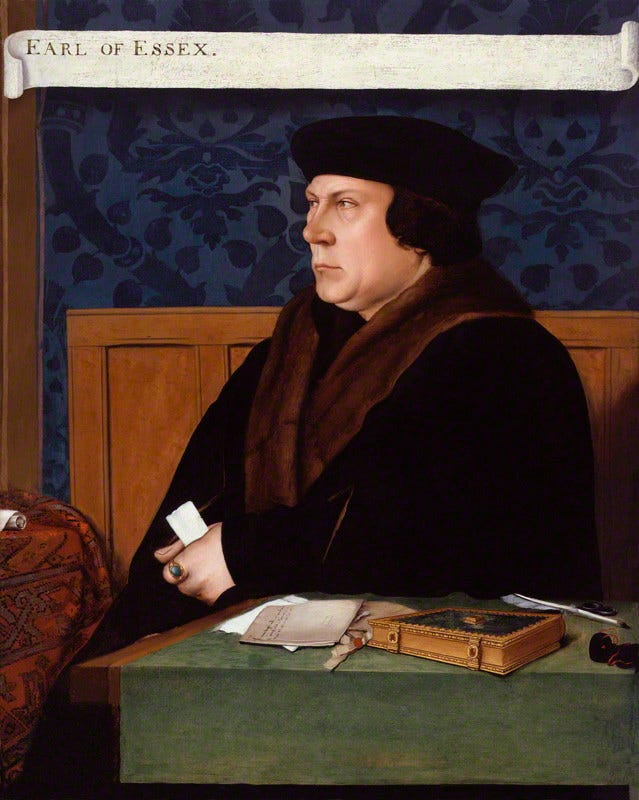
Thomas Cromwell – Source Wikimedia
How the son of such a man has achieved his present eminence is a question all Europe asks.
He was out of the realm from boyhood, a hired soldier, a wool trader, a banker. No one knows where he has been and who he has met, and he is in no hurry to tell them.
He is now 50 years old. Laborer’s body, stocky. Greying black hair. Some say he haunts the company of sorcerers.
His father was an Irishman, a brewer and blacksmith, a shearsman, a man with fingers on every pie, a scrapper and a brawler, a drunk, and a bully, often hauled before the justices for punching and cheating someone.
He never spares himself in the king’s service, he knows his worth and merits and makes sure of his reward: offices, perquisites, title deeds, manor houses, and farms.
He has a way of getting his way, he has a method; he will charm a man or bribe him, coax him or threaten him, he will explain to a man where his interests lie. And he will introduce that same man to aspects of himself he didn’t know existed.
He is distinguished by his courtesy, his calmness and his indefatigable attention to England’s business.
He is not in the habit of explaining himself and discussing his successes. Whenever good fortune called on him, he is always ready to fling open the door to her timid scratch on the wood.
No man in England works harder than he does. Say what you like about Thomas Cromwell, he offers good values for what he takes. And he’s always ready to lend.
Cardinal Wolsey used to say “Cromwell will do in a week what will take another man a year, it is not worth your while to block him or oppose him. If you reach out to grip him, he will not be there, he will have ridden twenty miles while you are pulling your boots on.”
If he had a grievance against you, you wouldn’t like to meet him at the dark of the moon. His father Walter used to say, “My boy Thomas, give him a dirty look and he’ll gouge your eye out. Trip him, and he’ll cut off your leg. But if you don’t cut across him, he’s a very gentleman. And he’ll stand anybody a drink.”
Now crowds scatter when he walks. Since he was sworn councilor, trestles and packing cases and loose dogs are swept from his path. Women still their whispering and tag down their sleeves and settle their rings on their fingers, since he was named Master of the Rolls. Kitchen debris and clerk’s clutter and footstools of the lowly are kicked into corners and out of sight, now that he is Master Secretary to the king.
He reads about all subjects: how to be a good prince, or a bad one. Poetry books and volumes of accounting, books of phrases abroad, dictionaries, books on how to wipe your sins, how to preserve fish.
A crowd has formed outside his gate, expecting largesse. His staff has money to disburse. There is the usual dole to the poor. Thurston, his chief cook, says they are feeding two hundred Londoners, twice a day.
Cromwell, always to the service of England, carrying out sweeping reforms
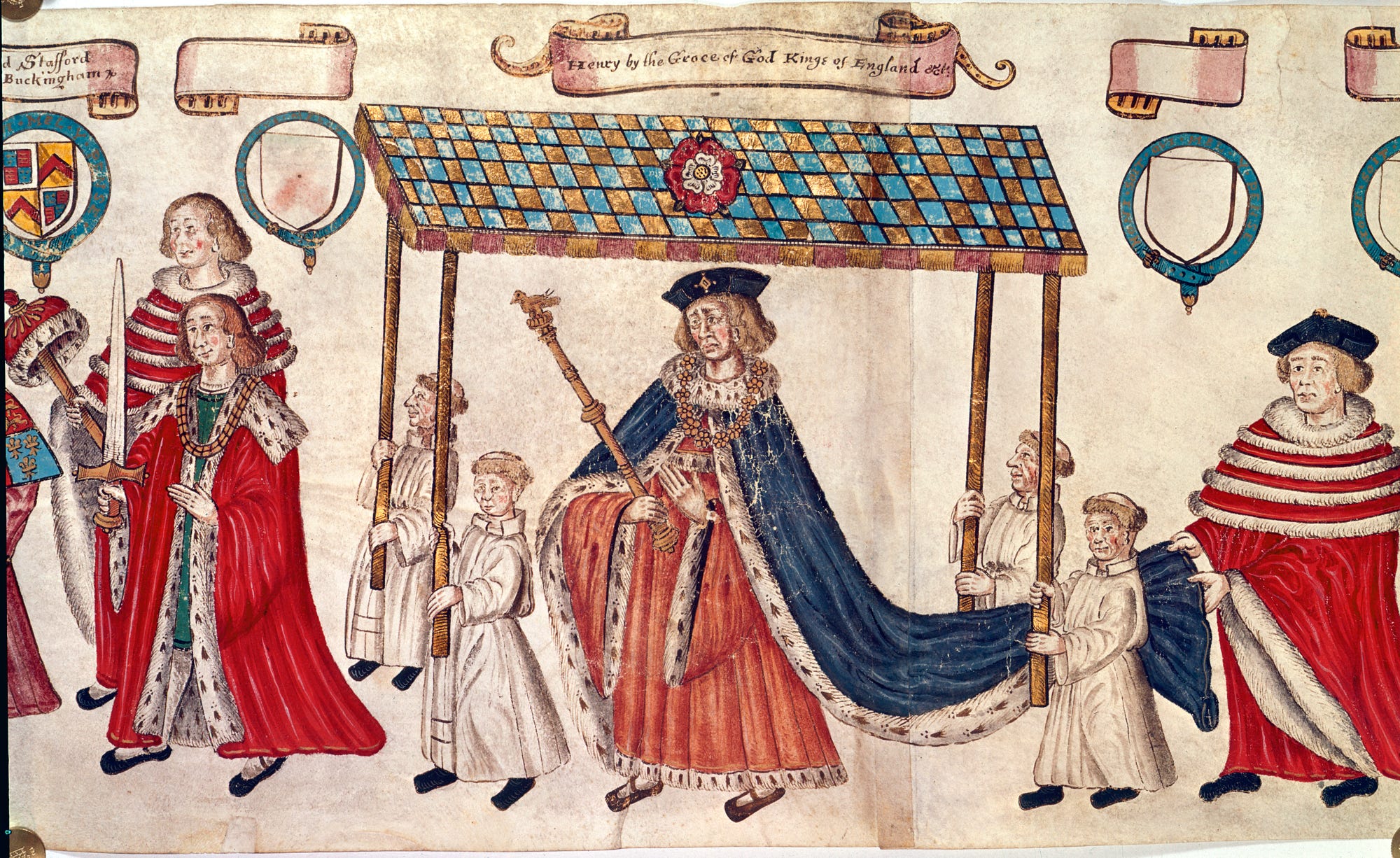
Parliament Procession of the Rolls – Source British Library
To him oaths to the papacy are of none effect, yet our oath to the king, as head of the church, is required. It emphasizes most strongly that the king’s authority is divine, and descends to him directly from God. And in no wise from a Pope. It descends from God without intermediary.
England needs better roads and bridges that don’t collapse. He is preparing a bill for Parliament to give employment to men without work, to get them waged and out mending the roads, making the harbors, building walls against England’s foes. It is a shame to see people begging their bread, when honest labor could keep the realm secure. We could pay them by levying an income tax on the rich.
Parliament opposed Cromwell’s new poor law requiring rich men to have some duty to the poor; that if you get fat, as gentlemen of England do, on the trade wool, you have the responsibility to provide for the men dispossessed and needy. But Parliament doesn’t think it is the state’s job to create work. These matters are in God’s hands. Poverty and dereliction are part of the eternal order and everything has a season: a time to starve and a time to thieve. It is an outrage to levy an income tax on the rich and enterprising to put bread in the mouths of the workshy. If Secretary Cromwell argues famine provokes criminality, Parliament suggests hiring more hangmen.
An act to give Wales members of Parliament and make English the language of the law courts.
Cromwell thinks they must have a great Bible in English. His ideal. A single country, single coinage, just method of weighing and measuring. And above all one language that everybody owns.
His greatest ambition for England: the prince and his commonwealth should be in accord. He doesn’t want the kingdom to be riddled with infighting. He wants it to be a household where everybody knows what they have to do and feels safe doing it.
Cromwell crusades against the monasteries
As for the monks, he believes, like Martin Luther, the monastic life is not necessary, not useful, not commanded of Christ. There’s nothing imperishable about monasteries. They’re not part of God’s natural order.
To Cromwell sins are sure to happen if you shut up men without recourse to women they will prey on the younger and weaker novices, they are men and it is only a man’s nature.
Those monks who are ordained priest can be given benefices to do useful work in parishes. Those under 24, men and women both, can be sent back into the world.
If the king had the monks’ land, not just a little but the whole of it, he would be three times the man he is now. He needs no longer go cap in hand to Parliament, wheedling for a subsidy.
They say if the Abbot of Glastonbury went to bed with the Abbess of Shaftsbury, their offspring would be the richest landowner in England.
This is not about your God, or my God, or about God at all. This is about which will you have: Henry Tudor or Alessandro Farnese? The king of England or some corrupt foreigner in the Vatican?
In light of this, Cromwell drafts an act to dissolve small monasteries, those worth under 200 pounds a year. He went on to pass an act to set up a Court of Augmentations to deal with the inflow of revenues from these monasteries.
Meanwhile, the Pope does not take it kindly, that he is laughed at in England and called mere “Bishop of Rome,” that his revenues are cut off and channeled into Henry’s coffers. A bull of excommunication hovers over Henry, making him an outcast among the Christians of Europe.
Former queen Katherine passes away. A mysterious fire catches queen Anne’s chamber. Are individuals visiting the queen when the lights of the palace are out?
Queen Katherine of Aragon dies under house arrest at Kimbolton castle. King Henry and Anne Boleyn are relieved and welcome the news with celebration. The king ordered a joust and the musicians tune up for the celebration at the queen’s chambers. Henry wanted Katherine’s plates and furs back. Richard Riche, a courtier and stickler for the law, made this cutting rejoinder: Majesty if you were never married to her, she was a feme sole, not a feme covert. If you were not her husband, you have no right to lay hands on her property.
Queen Anne offers to make peace with princess Mary, the daughter of the deceased queen Katherine, but she declined saying that she will not hold hands with someone who has shaken paws with the devil.
Queen Anne’s chambers catch fire. She is unhurt as the fire did not come near her. The conflagration burned only the corner of the arras.
Cromwell interrogates Jane Rochford, lady-in-waiting, to the queen and his informant: she gets on high horse and suggests that the queen may have people visiting her nightly: I shall be plain with you. I do not know who lit the candle. If I did, I would not tell you. No one will tell you either. If as it may happen, some persons visit the queen for the usual purposes of bedchambers after the lights are out, then it is an event over which we should draw a veil. Not that I say that there is such a person, I would not have knowledge of it, the queen knows how to keep her secrets.
The king’s jousting accident sent the court in turmoil; Cromwell realizes that the Crown succession line is not secured: Courtiers strategize against their enemies and seal alliances
Despite the opposition of his councilors, the king continued to joust. While jousting, the king was unseated and knocked over. Cromwell rushed to the tent, where the king was manhandled. He laid unconscious. Amid the wailing and babbling that filled the tent, the jousters told him that while the contest had not begun, the king was running and the point of his lance scooped the eye of the circle, sending the horse to stumble and roil with a scream and Henry beneath it. Some said he knocked his head.
Cromwell wonders now who can govern: Anne’s unborn child with Anne as regent? What becomes of England if Henry dies? He was married to Katherine for 18 years. This autumn it will be three with Anne, still no son to follow him, but a daughter with each and a churchyard’s worth of dead babies, some half-formed and christened in blood, some born alive but dead within hours, within days or weeks. He has a bastard, the Duke of Richmond, fine boy of sixteen, but what use to him is a bastard? The kingship as it goes is not secure to survive such a course. What does the King Edward’s Black Book say: nothing to the purpose. No one has made a plan for a king struck down between one moment and the next. No one dared to think about it.
Cromwell stares down at Henry. He thinks he has seen, but it might be a fantasy, a twitch of an eyelid. He stands over Henry and he sees that flicker again. He put his hand on the king’s chest, slapping it down. Says calmly. “The king is breathing”. Let the king breathe! As if in obedience, the king takes a deep sucking breath, and he swears and he tries to sit up. And it was over. They shout “Long live the king!” Cromwell studies the faces of the Boleyns apparently disappointed that the king had survived: they look numb, bemused with pinched faces.
The king recovering in his chamber instructed Cromwell to expunge the records to consider that this accident never happened: the king’s horse stumbled. But God’s hand plucked him from the ground and set him back laughing on his throne. The king’s accident was a reckoning moment for Cromwell: He could say. I’m a man whose only friend is the king of England. I have everything, you would think. And yet take Henry away and I have nothing.
Queen Anne is pregnant again, Hail, England!
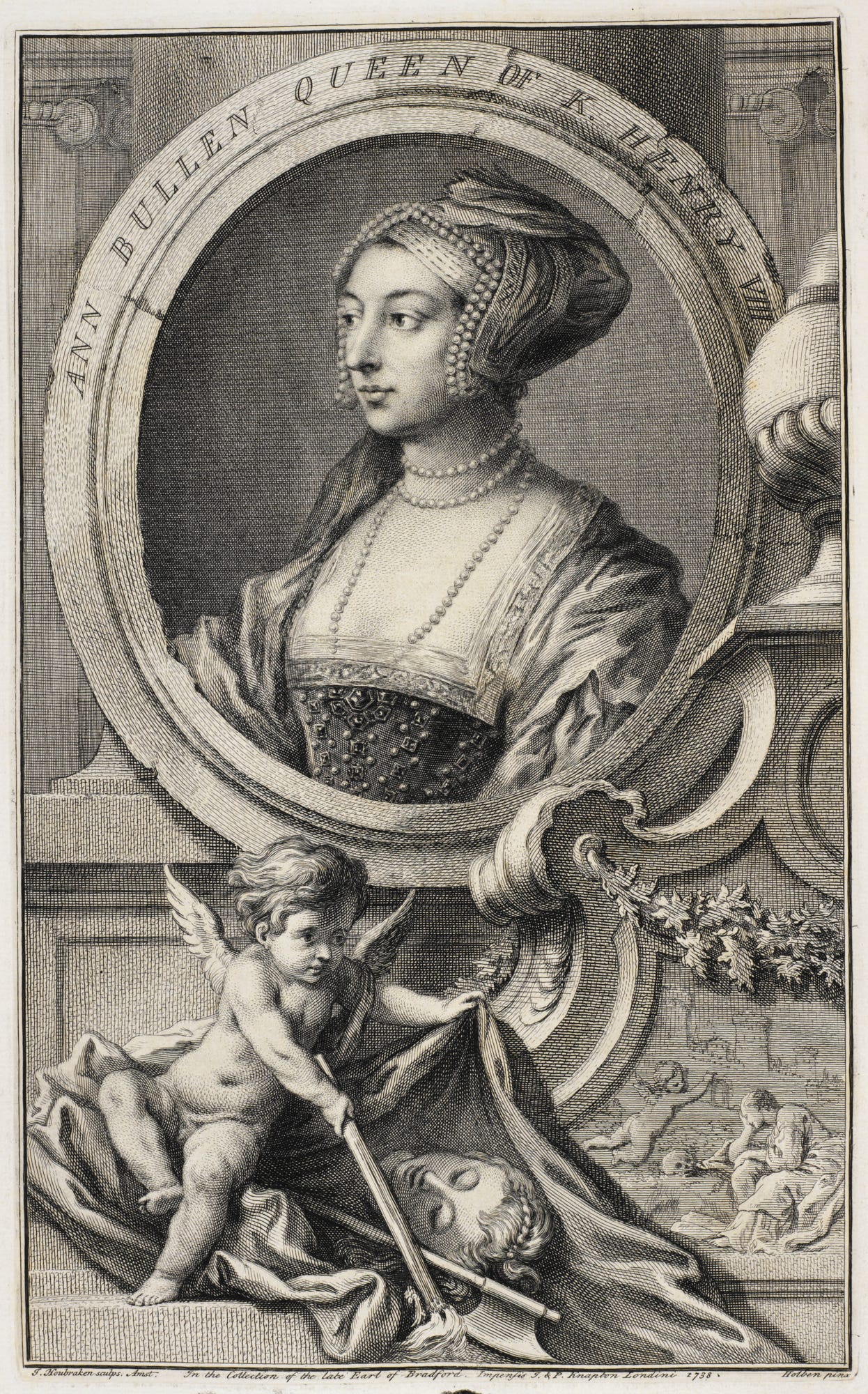
Queen Anny Boleyn – Source British Library
Anne is pregnant again and lets out her bodices. The good news seeps and leaks through the court. Bets are laid. Pens scribbled. Letters are folded. Seals pressed to wax. Horses are mounted. Ships set sail. The old families of England kneel and ask God why he favors the Tudors. King Francis of France frowns. Emperor Charles V sucks his lip. King Henry VIII dances.
A short-lived euphoria: Queen Anne’s second miscarriage prompts the king to cast doubt on his marriage to Anne
As queen Katherine’s body was being lowered into the ground, queen Anne had her second miscarriage. As soon as she experienced this, her face changed and her ladies immediately swept her to her chamber and bolt the door, leaving a trail of blood left on the ground. People gossiped that Katherine has reached out from her tomb and shaken Anne’s child free.
The king lamented the news. What does God want of me now? What must I do to please him? I see he will not give me male children. If this miscarriage is an accident of fallen nature, I thought God regarded every sparrow that falls, truculent as a child. Then why does God not regard England?
Henry went on to blame Anne: Just to be clear on this madam. If any woman is to blame, it is the one I am looking at. I will speak to you when you are better. And now fare you well, and you better stay in bed till you are restored. I myself doubt I will ever be. Anne shouted back: Stay my lord! I will soon give you another child.
Henry sent for Cromwell. He sat whispering to him, the planets their only witnesses: what if I were to begin to suspect, there is some flaw in my marriage to Anne, some impediment, something displeasing to God Almighty. Henry added: it seems to me I was somehow dishonestly let into this marriage. It seems to me I was seduced. I was practiced upon, perhaps by charms, perhaps by spells. Women do such things. And if that were so, then the marriage would be null, would it not?
Now the king wants Anne Boleyn out and Jane Seymour in.
The king is enamored of Jane Seymour; Cromwell and the Seymours strategize to hedge their bets at the court
Jane Seymour is well-known from the court, as she was lady-in-waiting to both former queen Katherine and current queen Anne. Anne laughed at Jane, called her pasty-face and miksoap, and asked what Jane can give the king that she lacked. The Boleyns are Cromwell’s enemies and Anne threatened to fell his head unless he submits to her. He devised an alliance with the Seymours since the king has taken interest in Jane Seymour their daughter. If Cromwell places Jane Seymour before Henry’s eyes, her brother Edward Seymour will rise within the court and give him an ally where allies are scarce.
Because Cromwell has a better business sense, he did not let Jane sell herself cheap. Now the king has walks with Jane and wrote her verses. Cromwell and the Seymour family advised Jane not to give in to the king’s sexual advances. Jane related that the king asked her to be his good mistress and they told her to limit her interactions with the king to walks and reading verses. She absolutely must not give in to anything beyond, because men will tell you that they are so in love that they fear unless they have you, they will die. The moment you give in, they get up and walk away and lose all interest.
The King gives Cromwell firm instructions to bring down queen Anne: Ease out the Boleyns, ease in the Seymours. Anne’s love affairs uncovered
Henry instructed Cromwell to get rid of Anne, get him Jane, and deliver him from bitterness, from gall. Cromwell met with the queen’s father Thomas Boleyn and brother George Boleyn (Lord Rochford) to have them convince the queen to retire to a convent. Her father agreed to the arrangement provided that his titles and possessions are not taken away. He expected a generous settlement. George Boleyn objected.
Cromwell goes on to interrogate Mary Shelton the queen’s lady-in-waiting: (betrothed to Harry Norris). Mary related that all day there are shouting, slamming doors, running feet, hissed conversation in undertone from the queen’s rooms.
Harry Norris declared that he visits the queen chambers because he loved the queen. Harry Norris quarreled with Mary about Francis Weston. Then Francis Weston quarreled with Harry Norris about the queen. And both of them quarreled with Will Brereton. Because the queen praised him saying: Here the man for me, Will is one who shoots his arrow straight.
Harry Norris said he will walk barefoot to China for the queen because he loves the queen and if aught came to the king, but good, he would look to have the queen.
Cromwell who records the conversation noted that it is treason to speculate on the death of the king. The law recognized it. It is called “imagining” his death:
When taken into custody, Harry Norris admitted his love for the queen, but denied the adultery and devising the king’s death.
Cromwell interrogated Lady Jane Rochford (George Boleyn’s wife) who related the following: My husband George is always with the queen. We have seen them kiss. A brother may kiss his sister, but he may not that way. He kissed her his tongue in her mouth. And her tongue in his.
Mary Shelton also reported: Mark Smeaton – the lutenist – is always in the queen’s presence chamber. As she goes by, she does not speak to him, but laughs and tugs his sleeve or knocks his elbow, and once she snapped off the feather of his cap as a love play.
Cromwell and his staffer took Mark Smeaton into their custody to interrogate him. Mark admits that the queen is unhappy with the king because she is in love with him. Put under duress, Mark admitted the next morning that he has had to do with the queen three or four times.
Cromwell met with the king to provide all details. The king orders Cromwell to arrest the queen the next day.
Arrests and building of the case for adultery and treason
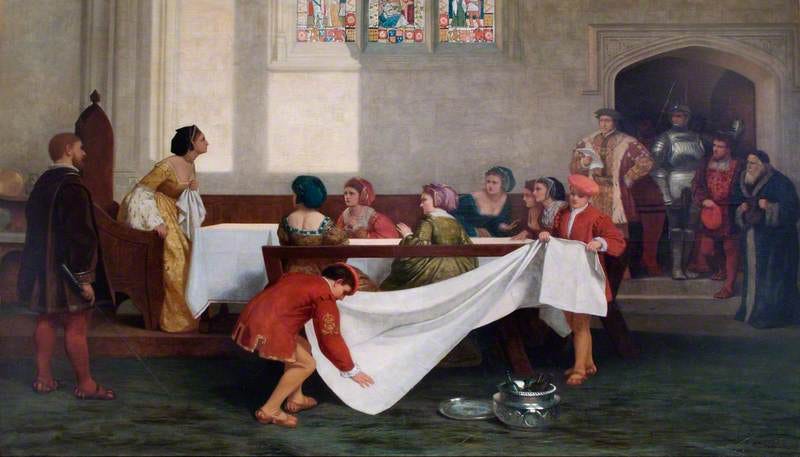
Arrest of Anne Boleyn – Source Wikimedia
The next day, the queen is asked to appear at the king’s council, seating in his Majesty’s absence. The councilors informed her that she was charged with adultery with Henry Norris, Mark Smeaton, Willam Brereton, and her brother George Boleyn. When she was told that Harry Norris and Mark Smeaton had confessed, she burst into tears. From the council chamber, she is escorted to her own rooms.
The council proceeded to arrest her and bring her to the London Tower. The right protocol due to her rank is performed: Rolling performed, folding of napery accomplished and the correct reverences are made.
Anne is taken into a barge to the Tower. Instead of going to the Tower, she would rather go see the king. But she knows the answer. Henry never says goodbye. When Anne reaches the Tower, she gets on her hands and knees on the cobbles, her head thrown back, wailing. The Tower constable asked: are we to fire the cannon? That’s usual when a person of note comes in, at the king’s pleasure. The boom of the cannon catches the courtiers unaware, shuddering across the water. You feel the jolt inside, in your bones.
Harry Norris, Francis Weston, Will Brereton, Mark Smeaton, George Boleyn (Lord Rochford): The queen’s lovers are arrested, interrogated and indicted for adultery and treason.
The trial of the queen’s lovers
Statements, indictments, bills are circulated, shuffled between judges, prosecutors, the Attorney General, the Lord Chancellor’s office, each step in the process is clear, logical, and designed to create corpses by due process of law. The protocol is the following: George Rochford (queen’s sister) will be tried apart as a peer. The commoners will be tried first. And the queen to be tried last. The order goes to the Tower, Bring up the bodies (title of the book): Francis Weston, William Brereton, Mark Smeaton, Harry Norris to Westminster Hall for trial on 12 May 1536.
They are brought in by armed guards through a fulminating crowd, shouting the odds and gambling over who will get off. The charges are read in court, as usual in treason trials, they will have no legal representation. And can speak, represent themselves, and can call witnesses. The king may grant them mercy of death by the axe, which will not add to their shame; Mark Smeaton will hang because being a man of low birth he has no honor to protect.
Mark only declares his guilt. He pleads for mercy. The other defendants are succinct. They are guilty, all condemned to death. Cromwell will move the king to grant them mercy to die by the swifter end. Including Mark. When they came in, the guards stood with halberds reversed; when they went out convicted, the axe edge is turned to them. The crowd shout: dead men! They are hustled back to their temporary home to write last letters and make spiritual preparations. All have expressed contrition, though none but Mark has said for what.
Queen Anne Boleyn’s trial:
Queen Anne entered the great chamber to stand before the peers of England. All men and none of them desiring her. The judges and peers consist of the nobilities of England: Lords, dukes, earls, among them moves softy, plain Cromwell. Greeting here and a word there. The Crown’s case is in order, no upsets are expected or will be tolerated, we shall be home for supper and sleep safely in our own beds tonight. The Attorney General reads the indictment and it takes time: crimes under statute, crimes under God. Cromwell stands up to begin his prosecution. The king wants a sentence by mid-afternoon.
The queen listens intently from her chair the list of her crimes: dizzying catalog of times, dates, places, of men, their members, their tongues: into the mouth, out of the mouth, into diverse crannies of the body; the loose words and taunts, jealous quarrels, the declaration by the queen that when her husband is dead, she will choose one of her lovers to be her husband, but she cannot say yet which. Did you say that: she shakes her head: No. All she will say is no, no, and no. At once she answers yes when asked if she has given money to Weston. And there was a whoop from the crowd.
The verdict drags in. The court implored brevity. No speeches please, one word will suffice: ninety-five vote guilty, and not one nay-sayer. The Duke of Norfolk (the queen’s own uncle and enemy) began to read the sentence: “thy judgement is this: Thou shalt be burned here, within the Tower, or else to have thy head smitten off, as the king’s pleasure shall be further known of the same.”
The queen rises from her chair, still composed, with an air indicating that she still doesn’t believe it. The messenger Francis Bryan is already gone to inform the king of the sentence.
A French ambassador meets with Cromwell to plead for mercy. The French find the whole England drama incomprehensible. If Henry wants to be rid of his concubine, why can’t he do it quietly? To the French, the best actions are covert. Henry does not need to parade his shame to the world. The ambassador related that two weeks ago before the trial, Henry sent for a French executioner, a man accustomed to chop heads. It seems there is not Englishman whom he trusts to behead his wife. So why does Henry not take her out himself and strangle her in the street?
Cromwell takes the death sentence warrants to Henry to be signed. Cromwell implored the king to grant all the convicts mercy to die by beheading instead of burning or hanging.
A court is convened to hear the divorce proceedings with Anne
Henry wants to kill queen Anne. But it is not enough to kill her. He is suspicious that Elizabeth Anne’s daughter, who is heir to the throne, is not his daughter. To put her out of succession, Henry needs to invalidate his marriage with Anne.
Cromwell goes to a court convened to hear the divorce proceedings with Anne. Two proctors of the queens are present. The king sent two substitutes. After a lengthy discussion to devise the marriage invalidity, they reached an agreement to declare the king’s marriage with Anne null. A decree is issued, but the grounds are to be kept secret, because “Truth is so rare and precious that sometimes it must be kept under lock and key.”
The execution of the queen’s lovers
The queen’s lovers are brought to the Tower Hill for execution. Her brother George Boleyn (Lord Rochford) after an eloquent speech was killed first and needed three blows of the axe. The other said not much, all proclaimed themselves sinners and deserved to die, but they did not say for what. Mark Smeaton being of low birth was left till last and slipping in the blood, called for God’s mercy and the prayers of the people.
The executioner must have steadied himself after the first blunder all died cleanly. Their bodies are hauled in cart, a heap of entangled bodies without heads. There are stripped of their clothes, which are the perquisite of the headsman and his assistants, and left with their shirts. The commoners are to be buried into a cemetery for commoners except Lord Rochford alone to go beneath the floor of the chapel.
The execution of queen Anne Boleyn by beheading
On the day of her execution, Anne took the Eucharist, declaring her innocence on the Body of God, then lamented the men who were gone and went on to joke that she will be known hereafter as Anne the Headless, Anne sans tete. The scaffold is secured by two hundred yeomen. The sword is heavy needing a two-handed grip. Four feet by two inches broad, round at the tip, double edge.
The solemn procession: the city first, aldermen and officials, then guards, in the midst of them the queen with her women. She wears a gown and a gable hood to hide her face. Once or twice the queen falters and slows the procession. To Cromwell she does not look like a powerful enemy of England, but looks can deceive. Anne has given alms as she walks. Her velvet bag is empty now. She passes the purse then moves to the edge of the scaffold. She turns to the crowd and begins to speak. “Pray for the king, for he is a good, gentle, amiable and virtuous prince…Then takes in a breath. Amen, she says amen.
Her head goes down. The executioner steps in and Anne’s eyes focus on him. As a formality he bobs his knees to ask pardon. He motions Anne to kneel. As Anne is blindfolded her lips move in prayer. The executioner waves everyone back. They all retreat and kneel. The executioner calls out. Get me the sword. Anne is misdirected and does not sense him. Then There is a groan. One single sound from the crowd. Then a silence and into that silence, a sharp sigh of a sound like a whistle through a keyhole. The body exsanguinates, and its flat little presence becomes a puddle of gore.
Charles Brandon, enemy of the queen and childhood friend of the king, is still standing. All other have knelt and taken off their hats to pay respect to the departing soul of the queen. The executioner retreats and the women handle her corpse. The queen’s sodden remains are lifted into an arrow chest. Her head is laid by her feet. The women walk away awash in the queen’s blood, closing ranks like soldiers.
Deeds of blood. Kings’ game!
King Henry marries Jane Seymour, drawing the curtain on the Boleyns
At the palace, the keys to all rooms are called in. Locks are changed. There are new servants everywhere, and old servants in new offices. New appointments to erase the Boleyns and promote the Seymours. Anne’s white falcon is replaced by the badge of the phoenix.
The king’s marriage to Jane Seymour is swift and private at Whitehall. Jane is found to be the king’s distant cousin, but all dispensations are granted in paper form.
Cromwell is still in charge. He has helped the king and the Seymours to the new world, the world without Anne Boleyn. If his new allies try to sweep him out, they will find him armored and entrenched, and stuck like a limpet to the future.
He has laws to write, the good of the commonwealth to serve, and his king. He has houses to build, books to read, he has titles and honors still to attain. He is now promoted Baron Cromwell. Can he call himself Lord Cromwell of Putney? He might laugh at himself.
We shall see.
Reflection & Insights
Deeds of blood. Kings’ game! – bloodletting
On the surface, England’s business under king Henry VIII was all about acts of parliament, dispatches to ambassadors, revenue and Wales and monks and pirates and traitorous devices and Bibles and oaths and trusts and wards and leases and the price of wool and whether we should pray for the dead. Beneath this routine, one thing was certain. It did not matter how many heads were chopped and how much blood was shed. What mattered was to ensure a clear path for the line of succession to the throne. The old families of England may squabble up, as it pleased, over who should rule. Queens unable to bear male children may be replaced in one way or the other. But ultimately, England will tend to its business as it has always been. The England crown will prevail. And Hail, King!
Contemporary rulers and statemen continue to wield power in a similar way with often some level of bloodletting. Thanks to technology, humans’ lethal capacity has increased manyfold over the centuries. In the name of the country or the state, rulers have at their disposal the weaponry and technology that allows killing in scale and at a fast pace.
Statemen always get their business done irrespective of the casualties and bloodshed: Deeds of blood. Kings or statemen’ game!
Mingling with kings brings power and fame, but fame and power come with the danger of playing with fire.
Thomas More, who was beheaded for refusing to recognize the king of England as the head of the church, epitomizes how mingling with kings or powerful people can be a dangerous game:
You can be merry with the king, you can share a joke with him, but it’s like sporting with a tamed lion. You tousle its mane and pull its ears, but all the time you’re thinking, those claws, those claws, those claws.
A lady-in-waiting reported that she once came to find queen Anne’s feet on king Henry’s lap, and he rubbing them like an ostler nursing some splayed-hooved mare. Now that she was beheaded, one can see that she tousled the lion’s mane and pulled its ears and got obliterated by its claws.
That was Anne Boleyn’s mistake. She took Henry for a man like other men, instead of what he is, and what all princes are: half god, half beast.
Besides that, we can tell that there is no mercy in the world of courtiers and powerful people. Cromwell took opportunity of the queen’s downfall to wipe out his main enemies: the Boleyns and everyone who slighted his deceased Master Cardinal Wolsey. They were all strangely indicted and convicted for treason and heinous crimes, and condemned to beheading. He slaughtered them all and only spared the life of Thomas Wyatt his friend’s son, who was part of the accused. Wyatt was the only one who escaped the scaffold.
We’ll see how his enemies treat him when they get the opportunity.
Cromwell: the successful courtier
Cromwell started as a staffer under Cardinal Wolsey and was then sworn in as the king councilor and ascended to high-ranking positions such as Master of the Rolls and Master Secretary of England. He relied on the following key traits: he was well-read and cultivated, he worked hard and outperformed his peers, he developed a network of informants to help make informed decisions, he mastered law and banking, he had a vast memory allowing him to remember all relevant key events, he mastered his emotion, he made money and spent it, and he was generous and attentive to the needs of his kinfolk. To this present days, we can tell that these traits continue to be essential for success in whatever endeavor or challenge you intend to tackle.
Character Growth Takeaways
Wisdom: [Scattered wisdom from the book to ponder over]

Looks can deceive – do not always trust your eyes with what you see. Our perception can be misleading!
The following sections well illustrate that:
You would think, to look at Henry laughing, to look at Henry praying, to look at him leading his men through the forest path, that he sits as secure on this throne as he does on his horse. Looks can deceive. By night, he lies awake, he stares at the carved roof beams; he numbers his days. He says, “Cromwell what shall I do? Cromwell save me from the emperor. Cromwell save me from the Pope. Then he calls in his Archbishop of Canterbury, Thomas Cranmer, and demands to know, “Is my soul damned?”
As Anne walked in the procession toward the scaffold of her execution, she wore a gown and a gable hood to hide her face. Once or twice, the queen faltered and forced the procession to slow down. To Cromwell, she did not look like a powerful enemy of England, but (here again) looks can deceive.
More words of wisdom:
All our labors, our sophistry, all our learning both acquired or pretended, the stratagems of state, the lawyers’ decrees, the churchmen’s curses, and the grave resolutions of judges, sacred or secular: all and each can be defeated by a woman’s body.
A good master gives more than he takes and his benevolence guides you through your life.
Cardinal Wolsey once said: Never let me hear you claim, you don’t know what goes behind closed doors. Find out.
Death is your prince, you are not his patron: when you think he is engaged elsewhere, he will batter down your door, walk in and wipe his boots on you.
You know Thomas More used to say: if the lion knew his own strength, it will be hard to rule him.
Roses snatched from the thorns.
An old man once told him: a dying lioness can maul you, flash out with her claw and scar you for life.
Lessons learned from an old Portuguese knight
A man’s reputation would go before him, and in the end, given a bad season, a run of ill-luck, reputation’s all you’ve got. So don’t you push your luck when the fortune’s star is shining, because the next minute, it isn’t…. Don’t pay out good money for horoscopes. If things are going to go badly, is that what you need to know when you saddle up?
(In jousting), there are three ways to fail: Horse can fail. Boys can fail, Nerve can fail (Interpretation: in whatever challenge you are taking on, you can fail in three ways: the means used, the people engaged, or their mindset)
Some people veer away in the second before clash. It is natural, but forget what is natural. Practice until you break your instinct.
Some men don’t swerve, but instead they close their eyes at the moment of the impact. These men are of two kinds: the ones who know they do it and can’t help it, and the ones who don’t know they do it. Get your boys to watch you when you practice. Be neither of these men.
Remember this above all: defeat your instinct. Your love of glory must conquer your will to survive; or why fight at all? Why not be a smith, a brewer, a wool merchant? Why are you in the contest, if it is not to win, and if not to win, then to die?
More words of wisdom
What is the nature of the border between truth and lies? It is permeable and blurred because it is planted thick in rumor, confabulation, misunderstandings, and twisted tales. Truth can break the gates down, truth can howl on the street, unless truth is pleasing, personable and easy to like, she is condemned to stay whimpering at the back door.
Did we follow the Black Book’s protocols from King Edward’s time? It orders everything in the household except the king’s privy chamber, whose workings are not transparent.
Make them prosper; out of superfluity, they will be generous. Full bellies breed gentle manners. The pinch of famine makes monsters.
The bleat of the man of fifty: I used to, I can’t now. There are compensations: the head is better stored with information, the heart better proof against chips and fractures.
Erasmus says you should praise a ruler even for the qualities he does not have. For the flattery gives him to think. And the qualities he presently lack, he might go to work on them.
It has always surprised me that those who are untrustworthy themselves are blind when placing their own trust.
Princes do not think as other men think.
The thought is father to the deed, and the deed is born raw, ugly, premature.
Parliament is an exercise of frustration. It is a lesson in patience. They commune of war, peace, strife, contention, debate, murmur, grudges, riches, poverty, truth, falsehood, justice, equity, oppression, treason, murder, and the edification and continuance of the commonwealth; then they do as their predecessors have done. They leave off where they began.
Temperance: [Lesson about restraint, balance, humility]

The following fact illustrates some level of temperance and self-control
Have you ever left a conference room or a board room feeling like Cromwell and Cranmer leaving the king after a discussion, where the king cast doubt on his marriage with queen Anne?
They are like two men crossing thin ice; leaning into each other, taking tiny, timid steps. As if that will do you any good, when it begins to crack on every side.
Pain-confusion technique taught by a blacksmith Walter, Cromwell’s father advised him as follows: Raise your hands and cross your wrists before you when you get burned.
The following sections illustrate how Cromwell used this technique to diffuse the king’s anger.
Henry is convulsing with rage: I really believe Cromwell, that you think you are king and I’m the blacksmith’s boy.
He knows his face shows nothing, neither repentance nor regret nor fear. He thinks the king could never be a blacksmith’s boy. Walter would not have had you in his forge. Brawn is not the whole story. In the flames you need a cool head, when sparks are flying to the rafter you must note when they fall on you and knock the fire away with one swat of your hard palm: a man who panics is no use in a shop full of molten metal.
And now Henry’s sweating face thrust into his: he remembers something his father told him. If you burn your hand, Tom, raise your hands and cross your wrists before you, and hold them so until you get to the water or the salve. I don’t know how it works, but it confuses the pain, and then if you utter a prayer at the same time, you might get off not too bad,
He raises his palms. He crosses his wrists. Back you go, Henry. As if confused by the gesture – as if almost relived to be stopped. The king ceased ranting and backed off turning his face away and so relieving him
Walter’s advice is not real magic — it’s a pain-confusion technique
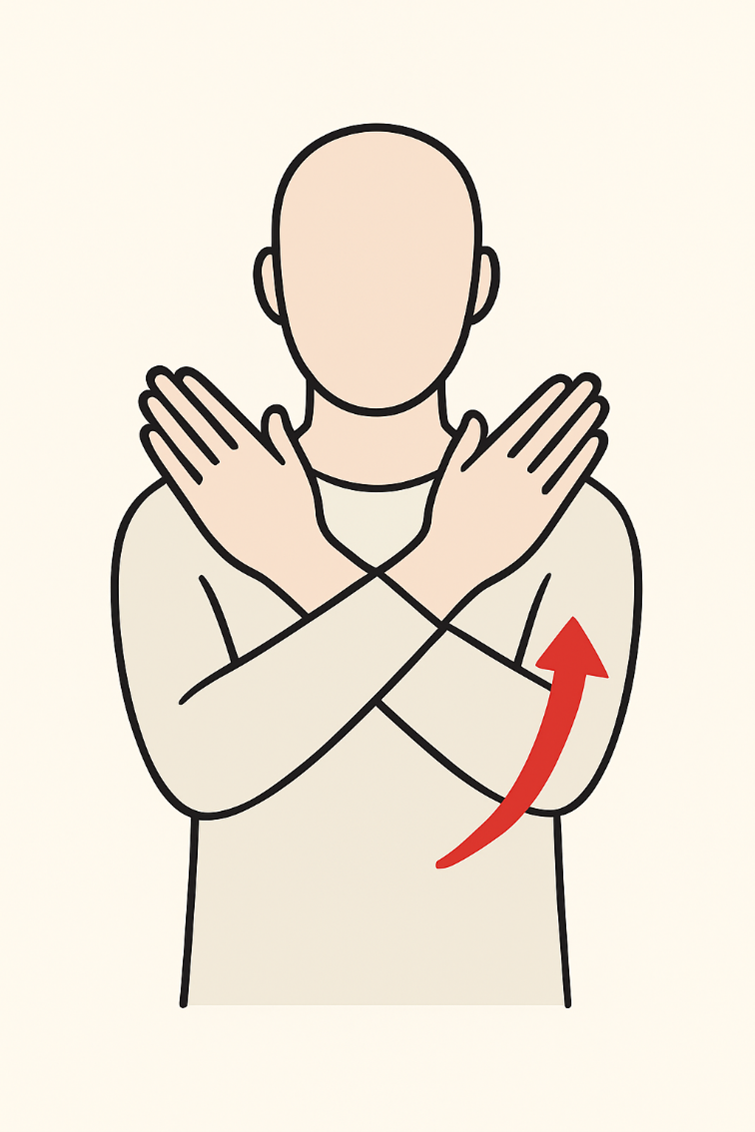
As anybody experienced the effectiveness of this pain confusion technique?
Courage: [Lesson about strength, risk, or standing up]

This passage depicts some sheer courage:
His nephew Richard Cromwell is a solid boy with the Cromwell eye, direct and brutal, and the Cromwell voice that can caress or contradict. He is afraid of nothing that walks the earth, and nothing that walks below it; if a demon turned up at Austin Friars, Richard would kick it downstairs on its hairy arse.
Justice: [Lesson about fairness, integrity, or responsibility]

An act of justice from the book:
Cromwell often took a stand in Parliament to defend the cause of the poor and needy in England.
Memorable Quotes & Phrases
Memorable Quotes from the Book:
From his uprising to his downlying, and all his private hours in between.
The sky is so clear you can see into Heaven and spy on what the saints are doing.
Think of the great limbs of those dead men, stirring under the soil. War was their nature, and war is always keen to come again.
We ladies, we do not spend all our time in idle calumny and scandal. Though God knows, we have gossip enough to occupy the whole town of women.
I have no time for wooing. I am fifty. At my age one would be a loser on a long-term contract. If I want a woman, best to rent one by the hour.
Letters from foreign rulers wishing to know if it is true that Henry is planning to cut off the heads of all his bishops. Certainly not, he (Cromwell) notes, we have excellent bishops now, all of them conformable to the king’s wishes, all of them recognizing him as head of the church in England; What an uncivil question! How dare they impugn his sovereign judgement?
The Italians say the road between England and Hell is worn bare from treading feet, and runs downhill all the way.
In village alehouses up and down England, they are blaming the king and Anne Boleyn for the weather: the concubine, the great whore. If the king would take back his lawful wife Katherine, the rain would stop. And indeed, who can doubt that everything would be different and better, if only England were ruled by village idiots and their drunken friends?
Once they were young men of esprit, young man of elan. A quarter of century has passed and they are grey or balding, flabby or paunchy, gone in the fetlock or missing some fingers, but still as arrogant and with the mental refinement of a gatepost
Now there is a new litter of pups, Weston and George and their ilk, whom Henry has taken up because he thinks they keep him young.
They (privy chamber members) know his (the king) person, each mole or freckle, each bristle in his beard.
If you guys don’t respect my awning, I’ll shear off your testicles and hang them over the doorway on a ribbon.
The English are a nation of hypocrites. Ingrates, natural liars.
Wreathed arms, laurels of victory, the shaft of the lictor’s axe, the shaft of the spear.
If you said to Lady Rochford, “it’s raining, “she would turn it into conspiracy, as she passed the news on.
Be the man with good news. Who knows, he (the king) might knight you on the spot.
All of them (boys) in flight from their father, from their belts and fists, and from the education they were threatened with if they ever stand still.
Those sectaries in Europe who are always expecting the end of the world, but who hope that, after the earth has been consumed by fire, they will be seated in glory: grilled a little, crisp at the edges and blackened in parts, but still, thanks be to God, alive for Eternity, and seated at his right hand.
They say money follows you these days like a spaniel his master.
The fashion for yellow in London: You’d see a woman in a brothel hoisting her fat dugs and tight-lacing her yellow bodice.
For we are condemned to fight until breath goes out of our bodies. She is my death and I’m hers.
Women pray to St Uncumber to be rid of useless husbands. Now, is there a saint that men can pray to if they wish to be quit of their wives?
The Commons. God rot them. Their heads are empty. They never think higher than their pockets.
It’s the way business has always been done, favors, sweeteners, a timely transfer of funds, or a promise of split proceeds.
Cromwell you are a Lutheran. No sir I am a banker. Luther condemns to Hell those who lend at interest.
Women age, men like variety: it’s an old story, and even an anointed queen cannot escape it to write her own ending.
Cromwell is supposed to manage it for him (the king). Ease out the Boleyns, ease in the Seymours. His business is kinglier: praying for the success of his enterprises, and writing songs for Jane.
I will give that puppy a kick in the ribs he will not forget.
She induced the king to put his seed otherwise that he should have. So now he berates her, that she caused him to do so. Opportunities lost. Seed gone waste slid away in some crevice of her body or down her throat.
Every duchess would be frolicking in a copse with a woodcutter. Only there are so few duchesses and so many woodcutters. There must be competition between them.
In France, torture is usual, as necessary as salt to meat; in Italy, it is a sport for the piazza. In England, the law does not countenance it. But it can be used, at a nod from the king: on a warrant.
When a man admits a guilt, we have to believe him. We cannot set ourselves to proving to him that he is wrong. Otherwise, the law courts would never function.
You understand there are charges that are written down in an indictment. And there are the other charges, those we don’t commit to paper.
If what someone wants from you is an admission, it is never in your interest to give it.
To intend the king’s death, that is treason. …but the queen says “if he dies”. So let me put a case to you. If I say “All men must die,” is that a forecast of the king’s death? And therefore treason?
Doing so would not be consonant with his dignity.
Marlinspike (Cardinal Wolsey’s cat), after some years of fighting and scavenging he ran off, as cats do, to make his career elsewhere.
We do not need any false excitement. After all, it is a law court, not a Roman circus.
The trial is fixed for getting Anne out, Jane in. The effects of it have not been tested yet, the resonances have not been felt; but he expects a quaking at the heart of the body politic, a heaving in the stomach of the commonwealth.
The monks have relics that make it rain or make it stop, that inhibit the growth of weeds and cure diseases of cattle. They charge the use of them, they do not give them free to their neighbors
The prior has six children and keeps his sons in his household as waiting men. He says in his defense he never meddled with married women, only virgins, and when he was tired of them or there were with child, he found them a husband. He claims he has a license given under papal seal, allowing him to keep a whore.
Vocabulary Builder
Words, phrases, and expressions from the book to season and spice up your language
Ride with the reins slack on the neck of one’s mount: loosen the reins or ride with slack reins means to relax control over a situation, person, or project.
he’ll stand anybody a drink: he will pay for a drink as a treat or gift for anyone
Find something that will fit the bill
The queen eggs them on (egg on): to strongly encourage or provoke them to do something, usually something foolish, risky
The enemy is within a bow shot.
The scrapping for the spoils has begun: a competitive, aggressive struggle between parties to claim the benefits, assets, or rewards from a victory or the collapse of a former authority
He is as courteous to a dairy maid as to a duke.
Not a gossamer thread of him is snapped: describes a person’s enduring spirit or life’s hardships, no part of their core identity or vitality has been broken.
To be at outs: to be estranged, unfriendly, or not on good terms with someone, often after an argument, disagreement, or conflict
Get the rough side of my tongue: to speak angrily or harshly to someone about something that they have done wrong
His behavior was mild to a fault: the person is so gentle, patient, or non-confrontational that it actually becomes a weakness or a problem
To be hanged and gralloched by the hangman:
Once they were young men of esprit, young men of elan.
o Esprit: the intellectual way—charming, funny, and deeply clever
o Elan: Vigor and vitality, dash and panache, confidence, momentum
A bone-crushing hug
Drain the flask: Drink to empty the bottle
Condign punishment: punishment appropriate to the wrongdoing
Fancy words
Lily-liver: weak and cowardly
Coxcomb: vain and conceited man; a dandy
Tittle-tattle: idle talk, gossip
Fuckwit: a stupid or contemptible person
Hoity-toity: haughty or snobbish
Tosspot: a contemptible or obnoxious person
Tilt yard: a place where jousts took place
Who Should Read This?
People advising presidents, rulers, or leaders
Decision and policy makers
Everyone who wants to sharpen his/her skills on power dynamics