

Hook
The caste system instituted by the Jim Crow laws in the American South triggered the Great Migration, the most dramatic and compelling story of American history.
The following sections describe the epic story of the American Great Migration. A story ripe with myths, untruths, hope and despair...

Book Summary
Introduction and origins of the Jim Crow South
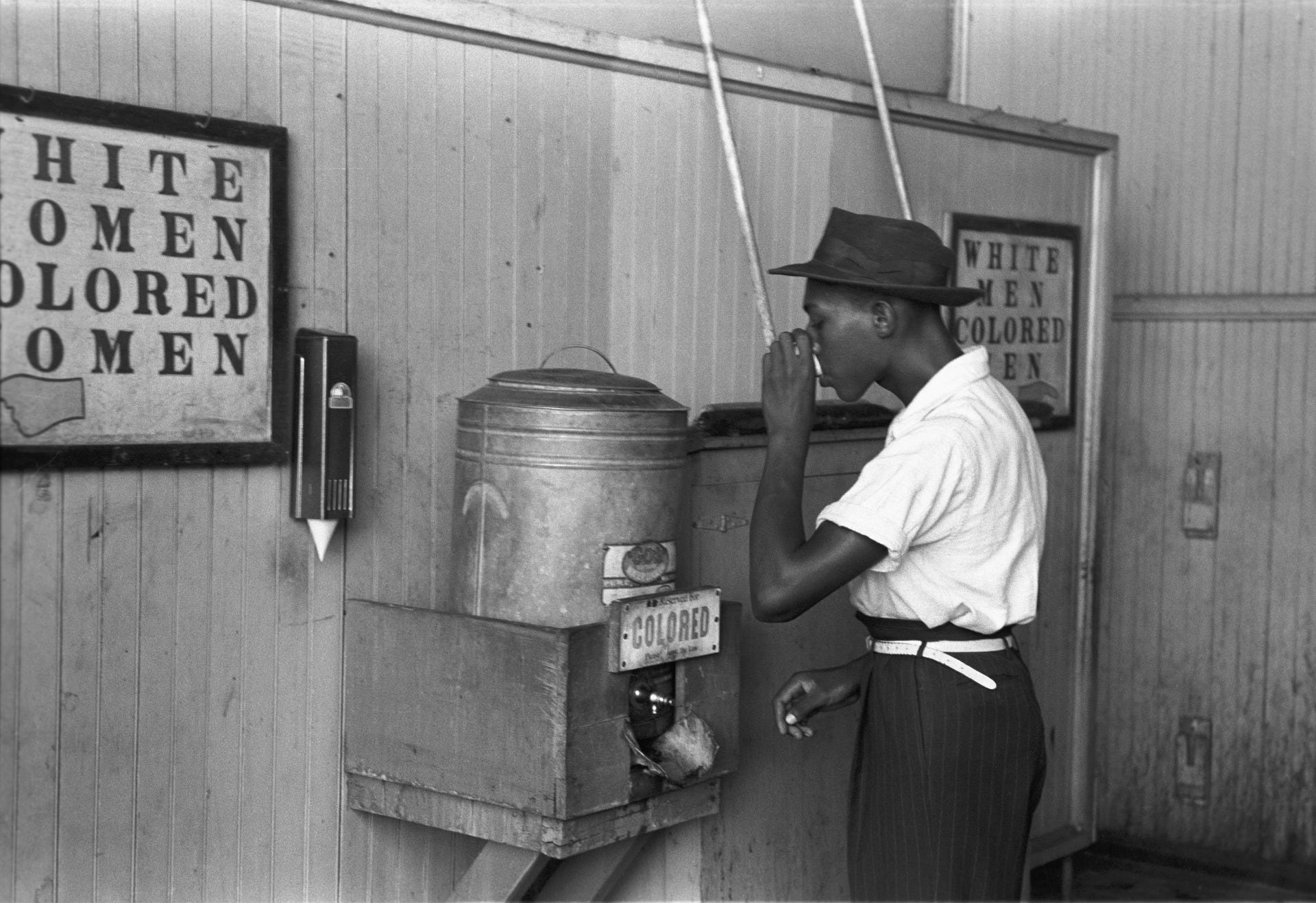
The name Jim Crow originated in the 1830s, when Thomas Dartmouth Rice a New York itinerant white actor popularized a song-and-dance performance called “the Jim Crow” in a minstrel show across the country. He wore a blackface and ragged clothes and performed a jouncy palsied imitation of a handicapped black stable boy, he had seen likely in his travels, singing a song about “Jumping Jim Crow.” Jim Crow was said to be the name of either the stable hand or his owner, living in Kentucky or Ohio. Rice who became a national sensation impersonating a crippled black man died penniless in 1860 of a paralytic condition that limited his speech and movement by the end of his life. By 1841, the term was applied to segregation laws. Southern state legislatures began devising laws that would impact every aspect of black people’s lives, solidify the caste system, and prohibit even the most casual and incidental contact between races.
With the Jim Crow caste system now in place, every black family in the American South had a critical decision to make. They were sharecroppers always losing at settlement with their planters. Typists wanting to work in an office. Yard boys scared that a single gesture near a planter’s wife could leave them hanging from an oak tree.
Then, WWI offered the golden opportunity. During the war, the demand for workers in the North went up. The North industrialists created incentives to coax the South workers into the North. It triggered a great exodus of blacks to the North. The South planters used all sorts of means to prevent the exodus by establishing laws, pay increase, or even threats, but people kept going up North to flee the caste system. The exodus to flee the South is known as the Great Migration, which lasted over six decades from 1915 to 1970.
The American Great Migration had more in common with the vast movements of refugees fleeing famine, war, and genocide in other parts of the world: oppressed people, whether fleeing 21st century Darfur or 19th century Ireland. The Tusti or Hutu people fleeing the Rwandan genocide. They all go to great distances, journey across rivers, deserts, and oceans or as far as it takes to reach safety with the hope that life will be better wherever they land.
Yes! In response to the Jim Crow caste system, black American families did what humans have done for centuries when life became untenable, what the pilgrims did under the tyranny of the British rule, what Scots-Irish did in Oklahoma when the land turned to dust, what the Irish did when there was nothing to eat, what the European Jews did during the spread of Nazism, what the landless in Russia, Italy, China, and elsewhere did when something better across the ocean called to them. They did what the African youth do today desperately sailing through the Mediterranean Sea in makeshift boats to flee the economic hardship and conflicts in their countries. They did what human beings looking for freedom and a better place, throughout history, have often done.
They left.
In 1919, Edwin Hubble observed a star far away that was not the same sun that fed life on Earth. It was another sun from another galaxy. This book’s title, The Warmth of other Suns, derived from this parallel, which inspires black Americans seeking to flee the harsh South, that in fact there were other suns.
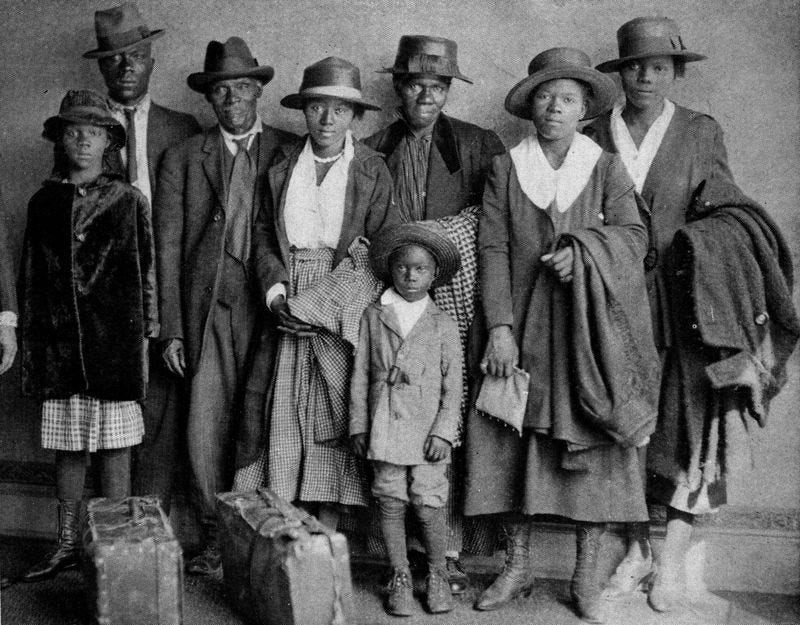
The following stories describe the lives, trials, and tribulations of three black American migrants who emigrated from the Jim Crow South to seek the warmth of other suns. They are (1) George Swanson Starling, born in Eustis, Florida, who migrated to New York; (2) Robert Joseph Pershing Foster from Monroe, Louisiana, who migrated to the West in Los Angeles, California; and (3) Ida Mae Brandon Gladney from Chickasaw Country, Mississippi who migrated to Chicago, Illinois. Each story describes their origins and early childhood, why they left the South and the trials and tribulations they faced where they immigrated as well as life in their old age and legacy as migrants of the Great Migration.
Story # 1/3: George Swanson Starling - Eustis, Florida (1930-1998)
Birth, Origins, and early life
Lil George (George Swanson Starling) was born in Eustis, Florida in 1930, and spent most of his early years circling north central Florida with his sharecropper parents. He spent his early life in the Jim Crow caste system, which pitted people one against the other. Whites against blacks, landowners against sharecroppers, poor against the poorer, blacks against blacks for extra scraps of privilege. George left Florida to live in New York because he would have died by lynching if he had stayed.
George attended school until high school and had planned on going to college. George liked school, was good with numbers and was always studious. His father, Big George, not getting the point for attending school refused to pay for his college tuition. In retribution to his father’s opposition to him going to college, he impudently took his girlfriend Inez to a ride, then surprisingly changed course and drove to the courthouse, then informed her that they were getting married on the spot. He paid two dollars for the marriage certificate fees and tied the knot with Inez for better or worse.
Three reasons that led George to flee the South

Under the Jim Crow regime, George experienced several events of lynching with torture and mutilation that had remained etched in his memory for the rest of his life. Lynching black people was commonplace.
In Marianna, Florida, Claude Neal a colored man was accused of murdering a white girl named Lola Cannidy. Neal was arrested by a white mob, which first castrated him, had his fingers and toes cut one by one, and they used a hot iron to burn his body for hours, then tied his nude mutilated body to the back of a car and dragged him to the house of the deceased girl’s family house. His body parts (fingers and toes) were then displayed throughout the town as souvenirs. The NAACP demanded that the federal government conduct an investigation, but President Franklin D. Roosevelt fearing the alienation of the South with a Democratic majority in Congress did not intervene. No one was ever charged in Neal’s death or spent a single day in jail. The Jackson grand jury concluded that the execution had occurred “at the hands of persons unknow to us.” Neal and Lola were lovers and it transpired that she may have been slain by her father, in an honor crime, because of the shame she brought to her family by dating a black man.
One day, George went to the pharmacy of his hometown. In the middle of a white crowd, the pharmacist, asked his terrier dog: would you rather be a nigger or die? The dog rolled over on cue, flipped his back, folded his legs, shut its eyes, and froze. Everyone erupted in laughter and George felt deeply humiliated.
George graduated high school, but could not attend college. Now that he had a family to take care of, he spent his time using his old car to drive people around for a fee and working as a fruit picker in the many groves of Florida, the fruit basket of the world. The pay for picking fruit was so meager that blacks could barely eke out a living. He decided to drive to Detroit to work in the booming manufacturing industry with few friends. In Detroit, when everything seemed to be going well, a major riot opposing whites and blacks over a false rumor of murder and rape erupted in the city. The riot caused dozens of casualties on both sides and hundreds of wounded. It got so worse that George decided to quit his job and go back to fruit picking in Florida.
Back in Eustis, WWII was raging and most of the youth were enlisted in the war leaving only few young people and mostly old men and women available to pick fruits, and they were so many groves gravid with fruits that needed picking. Instead of resorting to the yesaam and yessirs, George and a few friends organized the workers in a sort of union to force the packinghouses to pay them respectable wages. Instead of 15 cents a fill they demanded 25 cents and they would not pick unless the packinghouse budged, knowing that they desperately needed pickers. This resistance allowed the pickers to make more money in a day than they would have made working over a week. They all hated the war, but deep inside they wished it would never end.
Despite the significant improvement of their wages, some pickers who were afraid, went to the white grove owners and told them that they wanted to continue to work and get paid at the regular low wage, but they were prevented from working by George and his band. The grove owners met to prepare a plot to arrest George and his friends and lynch them. A houseboy overheard the grove owners plotting to treat George and his friends to a “necktie party” (execution by hanging) and informed him. George had only time to gather few belongings and say goodbye to Inez and flee to the North in New York. Lil George left the South, angry with a feeling of betrayal by negroes from his place. He had helped them get more pay a day than they got working for a week, but they complained to the grove owners that he was preventing them from working.
Life and challenges George faced as a migrant in Harlem, New York
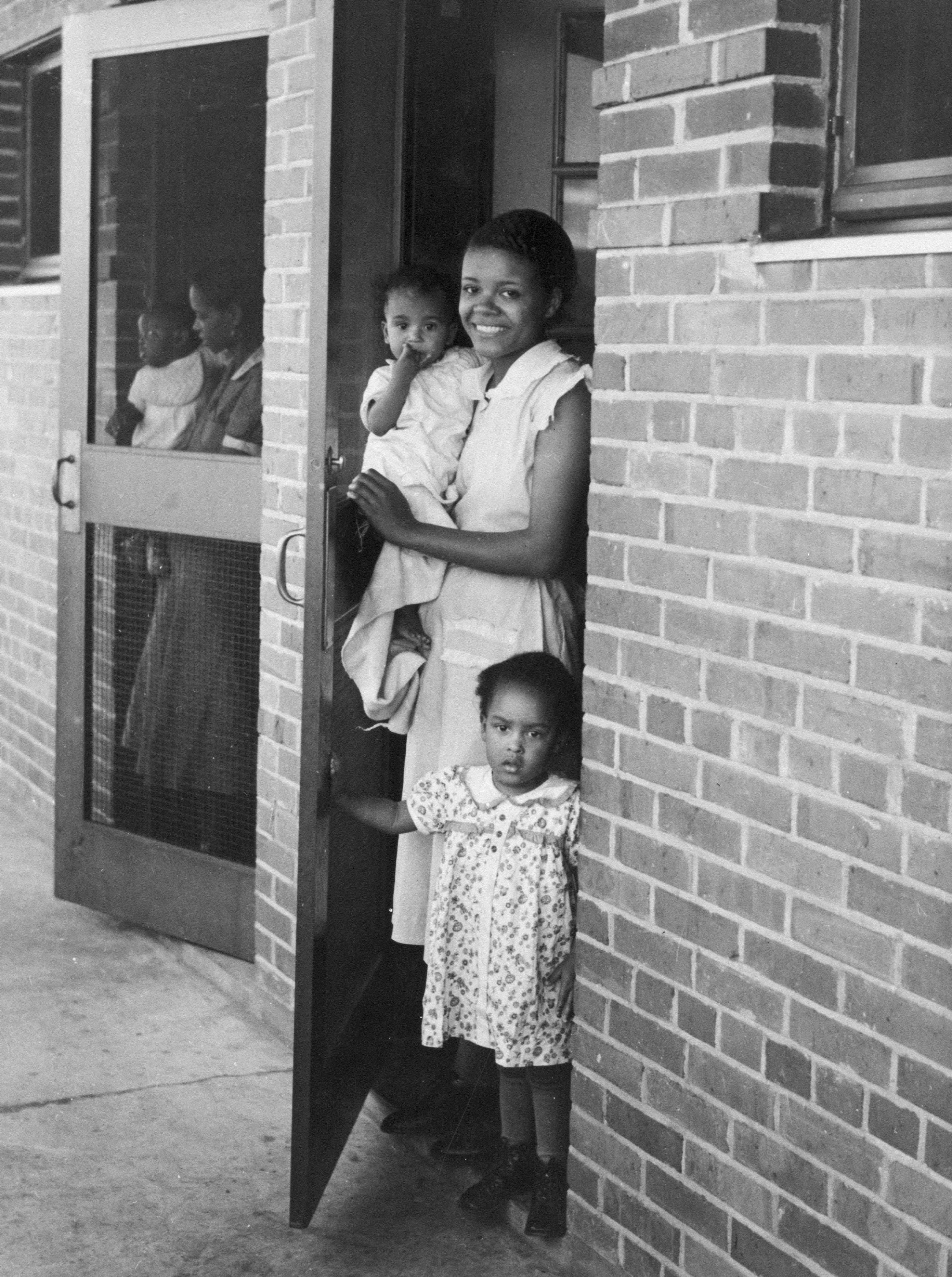
George stayed at his aunt Annie Swanson’s place to look for a job right away. Hardworking and motivated, he found a job at the railroad company as a car attendant travelling with passengers to help them handle their luggage and get settled. Within a few months, George managed to save enough and sent for his wife Inez to join him in New York. Once there, Inez took a job in nursing at a nearby hospital.
George spent most of his career as a porter travelling between the South and North helping passengers in the train cars. Southerners brought all sorts of odd things in the train. One day, a passenger spilled sweet potatoes in the car and scrambled all over the place to pick them up. People helped themselves to free potatoes while heartily laughing at the incident. In another case, a bag containing some freshly butchered meat kept pitapatting blood on the car’s floor and George struggled to keep the floor clean. The bag vanished at the end of the trip and he never got to know what kind of meat was in the bag or who the owner was. Some other passengers carried watermelon in their trunks while some even brought live chicken.
Life was not always about laughter. Rent was outrageously expensive in New York, where rascal landlords more than doubled the rent to take advantage of the influx of black migrants fleeing the South by the thousands. To make ends meet and get the rent, most black tenants from the South, threw paid parties in their houses, which they called house parties, where they allowed people to party for a fee. They served southern food including pork chops, sweet potatoes, alcoholic beverages and often resorted to gambling to increase the revenue.
From New York, the Eustis, Florida Jim Crow caste system continued to haunt him. George learned that a black boy sent a Christmas card to a white girl. The girl showed the card to his father. A white mob forced the father of the girl to witness the torture, mutilation, and killing of the boy. Harry Moore an NAACP member petitioned the local government and the U.S. DOJ about the case. In retribution, the Eustis Klan members placed a bomb under his bed which exploded and killed him and his wife. The FBI investigated, but no one ever got arrested or jailed.
George’s legacy and the winter of his life

George had a colicky marriage with Inez, who was difficult to get along with. She had a rough upbringing by the whip. She was an orphaned child who lived with Baptist aunts and a grandmother, who caught the spirits and spoke in tongue, and who only believed in the thumbscrew and the whip. As a consequence, she developed an unyielding character. They had two children Gerard and Sonya, who never gave satisfaction to George. While he travelled most of the time through the railroad and Inez at work, Gerard got into drug abuse and ended up moving back to Florida to become a drug dealer. Sonya got pregnant in her teenage period during a summer trip to Eustis.
George continued to work as a porter at the railroad and despite his education he never got promoted. He leveraged his many years of experience to make recommendation for improvement at the railroad organization, but he was never listened to and was never considered for anything. Similar to Eustis, he tried to make colored people aware of their condition. In July 2, 1964 President Lyndon B. Johnson signed the Civil Rights Act into law, 101 years after the Emancipation Proclamation by President Abraham Lincoln, ending segregation. But colored people continued to travel in the colored people’s cars. George tried to make them aware that they no longer needed to remain in the colored section or move to the colored cars when entering the South territories.
Later in life, Inez took ill and passed away. George spent his old days in his Harlem, NY brownstone now deacon of his church, surrounded by a community of black hooded and disheveled youth devasted by drugs, prostitution, violence, and crime. He challenged them to go to rehab, to go back to school to avoid being trapped by the system like himself. He taught them a precious life lesson: “never spite in life because it will always come back to zap you hard.”
George passed away from a coma in 1998. A service was held in NY before he was transferred to Eustis for a second service and interment. George spent most of his life chasing money to care for his children whom he was never around to watch after and it cost him a stiff price.
Story # 2/3: Robert Joseph Pershing Foster - Monroe, Louisiana (1918 - 1997)
Birth, Origins, and early life
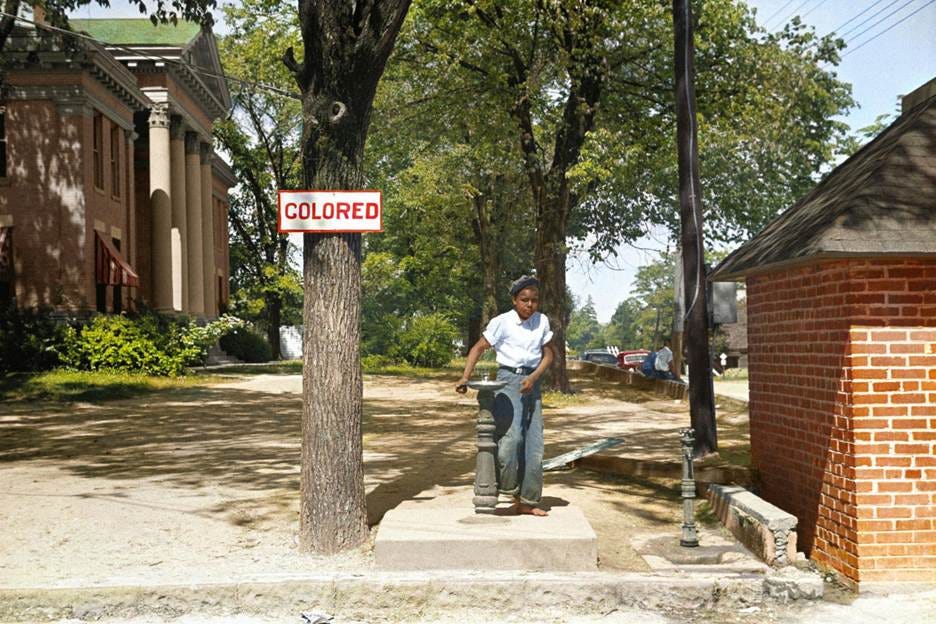
Robert Joseph Pershing Foster was born in Monroe, Louisiana in 1918 to Maddison Foster (the principal of Colored High – the Monroe high school for colored students) and to Ottie Foster, a teacher.
During his childhood, Pershing went to the Monroe movie theater, which was segregated under the Jim Crow caste system. Blacks considered as second-class citizens, the agent sold tickets swiveling between two windows: One window for whites and another for blacks. White customers always have priority over blacks, meaning that the agent should always finish serving all whites before helping blacks. Inside the theater, blacks were relegated to upstairs seats near the bathrooms, which reeked the odor of urine.
All his life, Pershing craved status acceptance from those who were most determined to withhold it from him and met slight and rejection at nearly every turn.
Reasons that led Pershing to leave the South and immigrate to the West
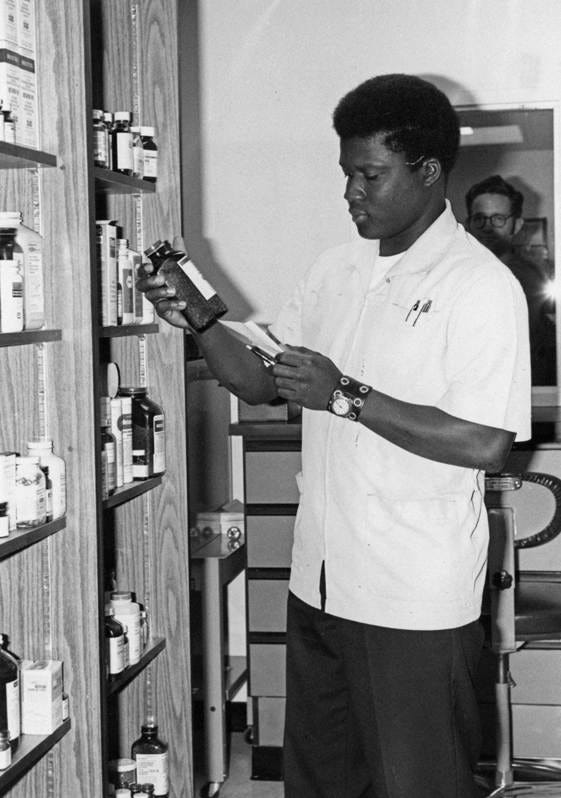
Pershing attended Monroe High, where his father was the principal. To get school supplies, black students drove to the back of the white high school to load their truck with hand-me-down supplies and used books. The city built a 2200-acre balconied building called Nivelle High School for white students, while black high schoolers remained in a grade school building. Research showed that at that time, the state spent $10 for every white student, while only $1 was spent for a black student. White teachers were earning 43% more than their black counterparts. It is estimated that the 1930s Jim Crow caste system created an abysmal wealth inequality that will continue to impact several generations of black people until at least the current 21st century.
11th grade was the limit to the education of black students in Louisiana. Pershing got a ticket to travel to St Louis to join his brother Madison, who was a medical school resident there. The bus ride was humiliating. During the trip, as white passengers boarded the bus, black passengers had to keep moving to the back of the bus, which was usually neglected and dirty. The Fosters decided that Pershing will attend the Moorehouse college, but he needed to attend two years at the Leland College, a lesser-known college, so they could save more money to pay for his tuition.
During a summer break at Leland, Pershing applied for a janitor job at a furniture store and the owner denied his application for the reason that he did not need a janitor job because he was a college student. He added that providing too much education to colored people will upset the balance of power and give blacks more ideas to cause trouble. The memory of this event continued to hurt Pershing deep inside himself. He was trying to make something of himself and an invisible hand kept punishing the ambitious and rewarding the servile to keep the colored in their place.
Later, he went at the sawmill to look for work, but the foreman told him that nothing was available. He got to work staking wood staves to make barrels. The foreman looked at him, but Pershing pretended not to see him and worked even harder. The foreman left and when he came back, Pershing was still working and the foreman hired him. In light of this, Pershing concluded that sometimes “you have to stoop to conquer.”
After that, Pershing was finally admitted to Morehouse, in Atlanta. At the homecoming celebration, they took girls to while away a night out imbibing sloe gin. On the way back from the club, he felt so elated and relieved from the stooping and yessums of Monroe that he stood in the middle of the street and shouted out loud” I’m free!”
At Moorehouse, the ambitious Pershing got involved the with upper crust of the southern black bourgeoisie. He dated Alice Clement, the only daughter of Dr. Rufus Clement, the almighty President of Moorehouse university, who forced WEB Dubois to retire and retreat to New York at the NAACP chapter.
After he graduated from Moorehouse, Pershing enrolled in graduate school at Atlanta University, while Alice completed her time at Spelman. Dr. Clement expected Pershing to become worthy of his daughter. Pershing decided to enter medical school at Meharry Medical College, following the footsteps of his older brother Madison. Pershing, besotted with the bourgeois world, took Alice as his ticket out of the caste system world he came out from Monroe, LA. He married Alice Clement, the daughter of the President of Atlanta University, in a dazzling wedding dubbed as “a setting of splendor and beauty.” After the wedding, he went back to graduate medical school as a doctor specialized in surgery.

In the medical world, Pershing and Madison were relegated to country doctors because they were not allowed to exercise in white hospitals. As a young doctor, Pershing was sent for to assist a woman in labor. Not having much experience, he tried few tricks, but he was not able to deliver the baby. The woman rolled over and said” all right Doc, get out the way.” She squatted on the bare surface and pushed hard, with few grunts. “Come on catch it now. The baby plopped into his hands. From this experience, Pershing learned this lesson: book knowledge and equipment in the world didn’t make you a good doctor if you didn’t know what you were doing or listen to your patients.
Pershing enlisted in the army and was denied the position of chief surgeon because of his race. On another case, a black soldier Wilbur Little returned from WWI duty to the Jim Crow South in Blakely, GA. A white mob ordered him to take off his uniform and walk home in his underwear; he refused and was lynched to death. Cases like these pushed many black veterans to flee the South for the North. After WWII, a colonel encouraged him to deploy to Austria, a European base as a captain and surgeon with his family.
There, he experienced humiliation. He could not deliver any white woman and although he was more competent than most white doctors, his opinion was always ignored and he could not even get into the operating room in the case of white women delivery. One day, a white doctor ordered a cesarean procedure and Pershing intervened and advised a treatment that saved the woman from the operation. Later on, when the woman met with Pershing, she kissed him and introduced him to her family as the doctor who saved her from a cesarian procedure. Pershing could not be happier and prouder.
Pershing continued to struggle to establish the practice he had always dreamed of in the Jim Crow South. As black surgeons, he and his brother could not operate at the nearby St. Francis hospital. But Pershing was persistent. He will not settle with a small practice like his brother travelling with a portable surgery table, operating people in their kitchen and getting paid with buttermilk or the side of a freshly killed hog; and he did not want to deliver babies in somebodies’ kitchen either.
He set out to go to California in the West, a place he had never been before.
Life and challenges Robert faced as a migrant
After a farewell party, Pershing pulled away from his father’s house and pointed his Buick Roadmaster to one direction: West. He headed for California not knowing where exactly in California he will land. For this new beginning, he decided to ditch his old clunky name Pershing to become now simply Bob or Robert, which was his other first name. He drove through Texas and made few stops before reaching El Paso, the border between the Jim Crow South and the West. In the Jim Crow South, he could not find any hotel accommodation for black people. Robert drove past El Paso and entered New Mexico, he went to the city of Lordsburg, the only place where black people could obtain a hotel room. He spent the night in a seedy hotel and hit the road the next morning. He drove several hours to reach Arizona hoping that he was finally done with the South, but this desert crossing turned out to be something he will remember for the rest of his life.
Crossing the Phoenix desert: No way for a black doctor and U.S. army captain to get a hotel room

After several hours of travel, he saw a motel where the vacancy sign was on and decided to stop and stay for the night. He was turned down for the reason that they forget to turn off the vacancy sign. He went to other motels down the road and he was turned down over and over. Finally, exhausted he went to a gas station and broke down sobbing and venting his condition to a white gas station manager. He said, he was a doctor and a U.S army captain having honorably served his country and still did not have the dignity to rent a single hotel room in his own country. The gas station manager consoled him, filled up his tank and gave him coffee, while warning him to expect to face some level of segregation in California, which was coined as the “James” Crow.
Alone in the desert, exhausted, and struggling to keep his eyes open, Robert drove miles and miles over more than a dozen of hours without sleep through the dark and chilling desert night. The next morning at dawn, he reached a fork on the road that read LA 380 miles and SD 348 miles. He decided to drive to SD to the shortest distance. He finally reached SD county in the morning. He spent a night in another seedy hotel before driving to LA, where he decided to settle for good.
The colored people who, preceded him in LA wouldn’t extend a hand to a newcomer.
Indeed, in LA, Robert did face James Crow, where he could not practice in any major hospitals such as the UCLA Medical Center. Also, black patients from the South were reluctant to accept him as their doctor. Robert resorted to going door to door to perform physicals and collect vials so he can save enough money to rent an office to establish his own practice.
Now, he was ready to send for his wife Alice and his two daughters. The apartment he rent for his family was nowhere close to the mansion of the president of Atlanta University, in which they were living in, but they had to make a go of it. When Robert started his practice, it was not a hit from the get-go. The people he knew from Monroe were not coming. Some were not coming because they were still nursing a grudge over cases when Robert’s parents were their teachers in Monroe. Other people from Monroe were simply envious seeing someone from Monroe succeed, they simply preferred to go to a white doctor.
Now that Robert reunited with his family in LA, they began suffering the consequences of having lived apart for years. They were cramped in a walk-in apartment, which had not a whiff of the luxury of their Atlanta place. Alice and the girls lived in a mansion located in a vast estate with a waitstaff. There began all the battles of the wills over their lifestyle and food taste. On one side, Alice and the girls were socialites from the high tone world of the black elite preferring souffles and casseroles. On the other side, there was a hardscrabble, but no less proud, black middle class of small-town Louisiana man, preferring oxtails, turnip greens with red peppered gambo.
Humiliation galore anew
After two years of hard work, Robert managed to attract enough patients needing surgery that he was able to secure the privilege to access a small hospital called the Metropolitan Hospital, nothing like the Cedars Sinai or the UCLA Medical Center. There, he met with white doctors and they often stay in the break room during lunch to exchange notes and brag about their weekend exploits.
The white doctors kept talking about their night escapades in Vegas and sometimes asked Robert’s opinion about some facts from Vegas. Blacks were not allowed in Vegas and Robert who really enjoyed life in the casinos felt irritated anytime they talked about Vegas and asked him questions. One day, he finally gathered his courage and told them that he was tired of them asking him about Las Vegas not knowing that blacks cannot go to the hotels in Vegas. He added that it was a thorn on his side and asked them to stop asking him about Vegas. That embarrassed the doctors, who stopped asking him about Vegas from then on.
Later on, Robert learned that blacks were now allowed in Vegas. Robert and his friends organized a party of thirteen black people to Vegas, including doctors and their spouses. The ladies bought clothing to satisfy three completely different outfits every day. They booked their plane tickets, made the hotel arrangement, and flew to Vegas.
When they arrived, guess what! The Pheonix hotel episode repeated itself. They arrived at the Riviera hotel with enough suitcases for a European tour, and there was no reservation to be found. They insisted and called the manager to no avail. Not only they were denied rooms, but the helpdesk did not offer any tangible explanation or any help to get accommodation anywhere else. They finally called Jimmy Gray an influential black casino owner, who managed to book them at another hotel. They were finally able to check into their rooms and begin to while away their casino time in Vegas.
Robert continued to work so hard that within a short time he attracted so many patients, got rich and purchased a house that really matched with his family’s fitting. He did not get into the hassle of moving into a white neighborhood. He picked a house with a putting green lawn and bougainvillea.
The legendary Ray Charles was one of Robert’s friend and patient. One day Ray Charles, intoxicated by drugs and exhausted from a preparation of a long-awaited tour tumbled out, fell and sliced his left hand on the edge of the table and severed an artery. Robert performed an emergency surgery, which saved his arm. Robert followed him through the tour to care for Ray’s arm. Ray Charles was surrounded by the Raelettes in form fitting sequin dresses with stilettos. He lived in a world of shimmying wig-, rouge- wearing back singers always embroiled in love triangle relationships.
In Detroit they met on stage a young blind prodigy called Steve Wonder. Robert returned to LA to deliver Ray’s wife Della Bea’s third child; they named him Robert after him. Ray Charles wrote a song in his honor, titled Hide Nor Hair which remained on the billboard for seven straight weeks in 1967.
Robert barely traveled back home to Monroe. He was more into gambling, either in casinos in Vegas or at the racetrack in LA.
Dr Rufus Clement passed on November 7, 1967 after a heart attack, sending his widow Pearl Clement to move in to LA with her daughter Alice and husband Robert.
Robert had always been ambitious. His practice was minting plenty of money. He had many famous patients from the black elite society. He married Alice Clement a well-born woman, he was gifted by three beautiful daughters, he lived in a 3600 square feet property and was driving a white Cadillac and socializing with prominent people such as Ray Charles. Yet Robert, being born on Christmas day, his birthdays had always been overshowed by the Christmas celebration. He had always yearned for a real birthday celebration. He decided to throw himself a sumptuous party on his 52th birthday in 1970. He spent more than a year to prepare for the party, hosting nearly 400 prominent people, which was titled in the newspapers as “the party of the year 1970 in LA.”
The winters of the life and legacy of Robert
In 1975, four years after the party of the year in LA, Alice, the socialite wife who gave him the ticket to the black patrician society took ill and passed. Robert, now widowed, lived with his aggrieved mother-in-law. They could not get along and Pearl packed her luggage and moved to Kentucky, the Clement’s hometown. Now alone in an empty big mansion, Robert sank into heavy gambling either in Vegas or at the racetrack. At times, he could make $50,000 a night and lose it in the next instant, and end up borrowing money so he can continue to indulge himself in gambling.
Robert also left his private practice to enter a veteran hospital, but that did not work well. Toward the end, he could not be accepted by the hospital management and to his surprise, he was being treated and ostracized for incompetence to the point where he was demoted and relocated to an office close to the lavatories reeking urine and feces. Had what he fled from the South in Monroe, LA caught him in his promised land LA? That really took a toll on his health and he ended up having a stroke who slowed him down.
Robert retired and was now a grandfather. He spent most of his time playing blackjack and gardening. His health continued to deteriorate after a heart and kidney issues and a cancer diagnosis. He later became homebound and remained under the care of a home nurse. There was a whole lot of food off his diet: chicken, cornbread, collard green, oxtail, red-peppered gumbo, grits, and chitlin. But as a southerner, Robert continued to indulge himself whenever he got the opportunity.
Dr. Foster Robert passed away on August 6, 1997 at age 78 after a heart attack that sent him into a coma, from which he never came out.
Gambling was his mistress and medicine his beloved. He cared for every single of his patients. In his eulogy, one of his patients testified: “He delivered my son; he saved my life. He was the greatest man I ever knew. I will never forget him as long as I live.”
Story # 3/3: Ida Mae Brandon Gladney - Chickasaw Country, Mississippi (1913-2004)
Birth, Origins, and Childhood
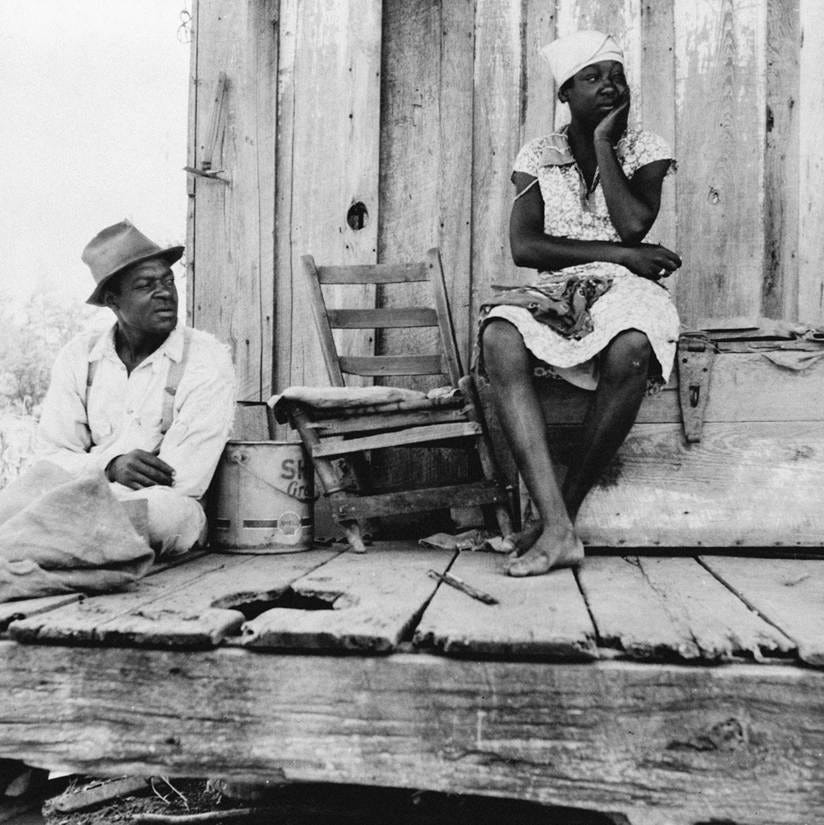
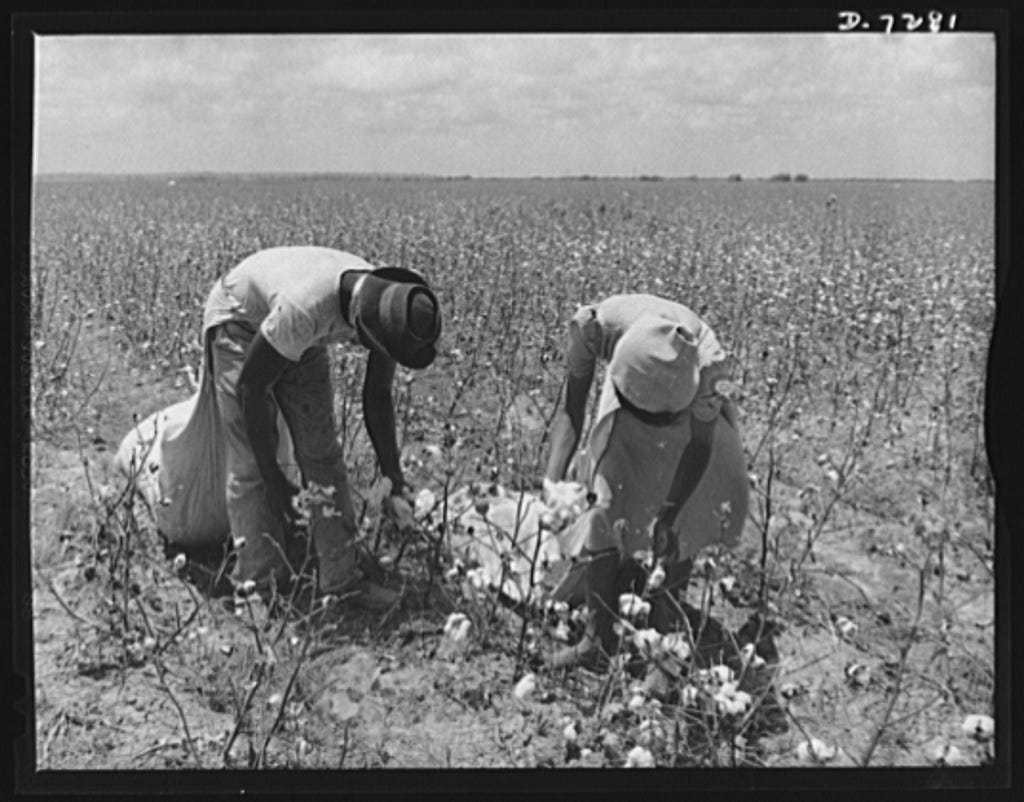
Ida Mae Brandon Gladney married her husband George Gladney in 1929 at age 16 during the Jim Crow period in Chickasaw Country, Mississippi. The couple moved to Edd Person’s plantation to pick cotton as sharecroppers. Every year after the harvest season, Mister Edd deducted what his sharecroppers owed him namely the furnish (cottonseed, fertilizer, implements, ginning fees, cornmeal, salt pork, etc.) and this took almost half of what they produced. In the Jim Crow South, there was barely money flowing between planters and sharecroppers, the entire system being built on credit. Mr. Edd gave few dollars to George and Ida Mae. Ida Mae had never been a good cotton picker and she could never reach 100 lbs. to get 50 cents.
Cotton picking was harsh work. Pickers’ hands were cramped and calloused from the repetitive motion of picking. A good crop and high price never made any improvement in Ida Mae’s existence, but it meant a planter’s wife can begin dreaming of a new carpet, piano, or parlor and the salesman of farm implements could be lavish with more expensive cigars that he had smoked last year. Despite the hard toil of picking cotton from sunrise to sunset, pickers could not even afford clothes made from the cotton they picked. Instead, they had to resort to clothes made from flour sacks.
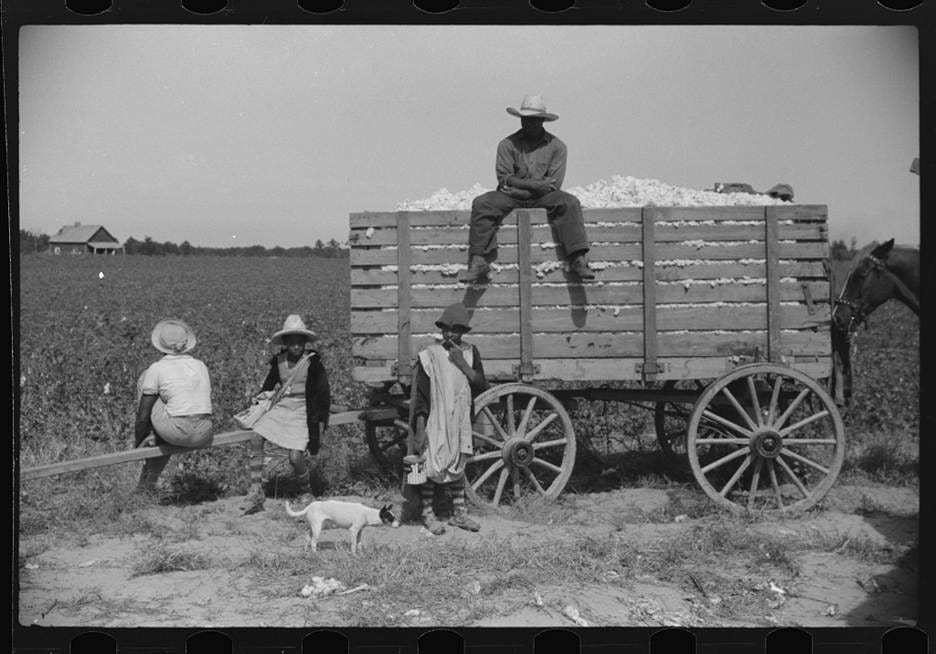
Ida Mae was rather very good at cooking, raising chicken, and gardening. When Ida Mae was a child in school, she was called a tomboy because she was courageous and daring and liked to do boys’ things. One day a Speckler snake ventured into their kitchen and she picked it by the tail and threw it outside. Ida Mae gave birth to a girl whom they named Velma. Within another year, she gave birth to Elma. They set the kids unattended under a plum tree and got to work. Elma ate plum, got food poisoning, and died due to a lack of appropriate care.
Reasons that led Ida Mae to flee the South and immigrate to the North
Ida Mae and other women in the plantation raised turkey for their master Mister Edd. A lady named Addie B’s turkey went missing one day and Addie B told Mister Edd that Joe Lee (George Gladney’s cousin) stole them. Mister Edd and a white mob bound Joe Lee to a log in the wood and beat him so bad that his coveralls, soaked with blood, stuck with the surface of his skin, then they took him to the county jail and threw him in a cell. Joe laid there unconscious and unattended for hours until George found him. Guess what! The turkeys went out roosting in the countryside and came back home few days later. Mister Edd never apologized. George made the resolution to leave Mississippi and go to the North. He said to Ida Mae: “This is the last crop we’re making.”
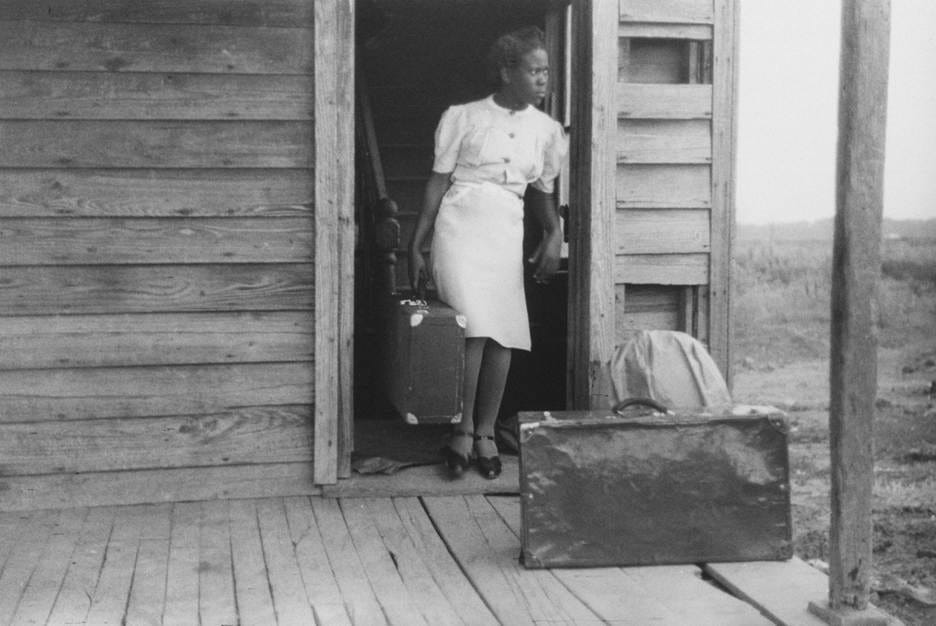
At the end of the harvest season, it was time for George to go to settlement with Mister Edd. George and Ida Mae bowed their head and prayed for light on how to inform Mister Edd that they were leaving his plantation without triggering any retribution. At the settlement, George got few dollars from Mister Edd and he carefully informed him that he was leaving his plantation. Mister Edd protested, but luckily, he did not prevent them from leaving. Prior to the settlement, Ida Mae had sold their possessions one by one so as not to draw people’s attention on them planning to leave.
According to the Anthropologist Hortence Powdermaker, about 20% of sharecroppers earned between $30 and $150 for a year of hard labor. The remaining sharecroppers either broke even, meaning the owner had decided that he owed nothing to the sharecroppers and in return the sharecroppers got nothing from the harvest. They either got nothing for a year of hard work or they remained in debt.
Ida Mae and family packed their luggage, purchased train tickets, got blessing from her mother and left the South for Milwaukee in the North. Without any comments after more than 24 hours of road travel, they crossed the Mason-Dixon Line at the Ohio River, which was the border between Kentucky and Illinois, between the provincial South and the modern North, between servitude and freedom.
Life and challenges faced by Ida Mae and family as migrants

Ida Mae and her family arrived in Chicago, IL riding the Illinois central. They were disoriented by the scenery of the fast-paced city, where people barely have time to say hi. They needed to catch another train to Milwaukee. There, George found a job as an ice delivery man into cold-water flats, which was no doubt a stoop labor, but far better than what they were making back in the Jim Crow South. They had a brush with the temptation of big cities, stacked heel harlots stumbling out of buffet flats, card shanks, crapshooters.
Life in Chicago was not easy. Migrants were coming by the thousands fleeing the Jim Crow caste system of the South. Industrialists took advantage of their cheap labor using colored workers to break strikes or simply denying them some positions, which were reserved for whites even if the black workers had the qualifications. The housing market was characterized by an atmosphere of congenial rascality, where landlords outrageously increased the rent for everything: cellars, garages, flats. The city of Chicago also came to be segregated in some way. On one side, there were blacks and whites on the other side. The industrialists worked to pit the blacks against the whites, who nursed a grudge against colored workers accusing them of deteriorating their work conditions. That resulted in a series of riots with several dozens of causalities on either side and thousands of wounded.
In 1940, something unthinkable in the South happened. Ida Mae and George voted for the first time in their lives in Chicago helping Roosevelt win a 3rd term in the White House. George and Ida Mae continued to struggle to find a respectable job in Chicago. Obviously, the apartheid that pushed them out of the South continued to haunt them. Black workers were mostly hired for menial work. They moved from the mind-numbing sameness of picking cotton to the mind-numbing sameness of turning a lever. Black women’s access to work was even worse. They were confined to hire themselves out to menial tasks, housekeeping, and often they were subject to white male abuses.
In 1966, blacks could vote and sit in the same break room as whites, but they were still confined to the overcrowded sections of Chicago, restricted from the positions they could hold and the mortgages they could afford. This was happening not by edict like in the South, but by circumstances in the North. Ida Mae witnessed the march in Chicago led by MLK to protest against segregating blacks in the hardscrabble North. A white mob hit his head with a rock bringing him down to his knees, but he refused to back down. They carried their protest amid chants treating black marchers as cannibals, savages, and worse a bus was overturned and a car burned and the entire community plundered causing dozens of wounded and arrested.
After 30 years of life working in the unskilled labor market, Ida Mae, George, and their children were able to purchase a tree-flat in a newly open-up neighborhood on the south shore. As blacks moved in, whites progressively fled the area. This separation was coined by socialists as hyper-segregation: a separation of the races that was so total and complete that blacks and whites rarely intersected outside of work.
Black migrants were at a disadvantage in comparison to European immigrants (Czechs, Pols, Italians, Hungarian). European immigrants could easily ditch their eastern or southern European names, wipe away their ethnicity by adopting Anglo Saxon surnames and melt into the world of privileged native-born whites. e.g. Issac Danielovich son of immigrants from Belarus could become Kirk Douglas so his son Michael Douglas could pursue stardom instead of Michael Danielovich. Blacks were already wearing their slave forefathers’ names acquired from their owners, which they could not slough off.
George became a pastor and continued with his blue-collar job until old age, where he took ill from a heart disease. He didn’t take any medicine from the doctors and only relied on prayers and natural medicine from the South. He passed away at age 68 after having suffered multiple stokes.
The winters of Ida Mae’s life and legacy
Ida Mae remained an eyewitness to the war on drugs playing out in the streets below her window. She spent most of her time sitting at her window looking at the police, drug dealers and gangbangers and lookout boys dealing drugs chasing and shooting each other. The black youth was mired by drugs and prostitution. Ida Mae got older and healthy and loved cooking southern food (collard green, cornbread, etc.) or she attended funerals as the family matriarch.
In the 1997s crime, drugs, prostitution remained rampant in Chicago. Ida Mae and her neighbors regularly attended BEAT meeting where they discussed their community crime handling status. On August 14, 1997, a certain South Shore District 13 senator named Barack Obama made an appearance at the BEAT 421 meeting, made a minilecture on state legislation, and offered them to call him in case they needed anything a senator can help with and left the church basement. No one imagined that they had just met with the man who a decade later, became the 44th U.S. President, Barrack Obama.
In 1999, Ida Mae turned 89 close 90. It was unthinkable to see her witness the new millennium. She relegated all the disappointment she experienced in life to the furthest recesses of her mind and looked at every moment as a blessing and every breath she took as a gift.
Ida Mae peacefully passed in her sleep at age 94 in September 2004.
Conclusion
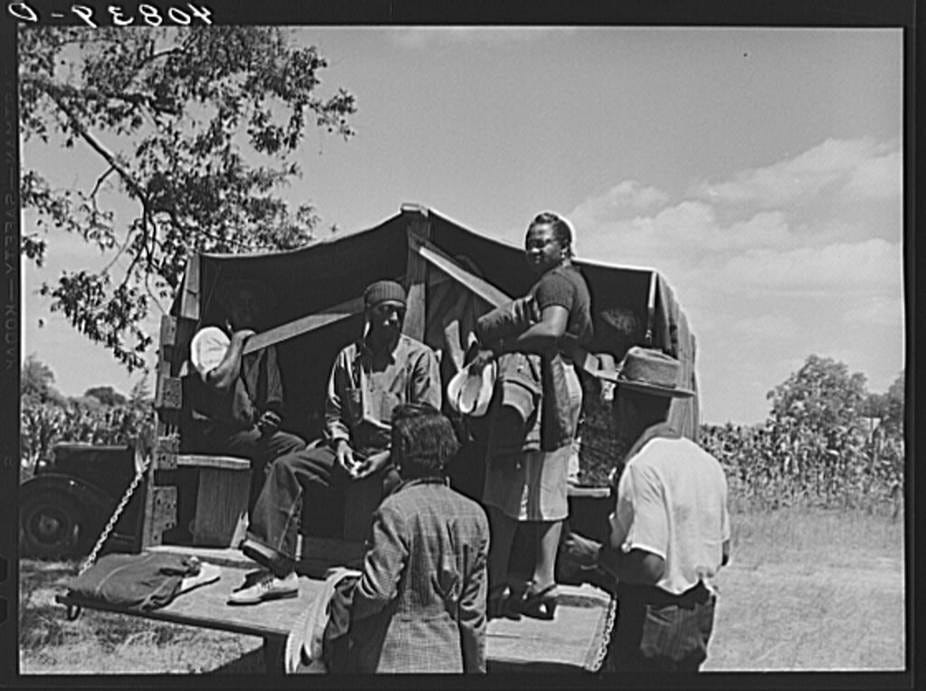
Southern blacks debunked the theory of the British historian E.G. Ravenstein stating that due to human pragmatism and inertia, migrating people tend to go no further from their homes in search of work than is absolutely necessary. The bulk of migrants prefer a short journey to a long one, the more enterprising long-journey migrants are the exceptions and not the rule. Southern blacks were the exceptions. It is true that like Europeans immigrating to the U.S., they did not cross the turnstiles at Ellis Island, NY. They travelled deep into far flung regions of their own country.
People developed several misconceptions about immigrants from the South. Illiterate, more likely to divorce, bear child out of wedlock, single parents, etc. In brief, they were considered as bedraggled hayseeds right off the plantations, (who came to the North to cause trouble). Speaking a slow syrup accent, lacking education, wearing rough cast clothes. This was a pure myth and untruthful. Like Robert and George, the migrants from the South were likely more educated than the black natives of the North and often as educated as the whites if not more.
In addition, they had the migrant advantage: they were more goal-oriented, more likely to stick to their jobs, to succeed so as not to return home to face the “I told you so”. The migrants tended to stick together in solidarity. The higher the obstacles and farther the distance travelled, the more ambitious and resilient they were. So, let’s debunk the calcifying untruths about Southern black migrants.
Several key questions emerged from the Great Migration:
Was the Great Migration positive or negative? The Chicago commission of race relations obtained the following answers from the migrants:
More dignity, freedom, more money
More consideration, stop being held down
Can vote, considered as human beings, no more lynching, no fear of mobs,
But don’t like rooming and closeness of houses, the city noises and bustling with people.
Did the Great Migration achieve the objectives of those who willed it? Was the loss of what they left behind worth what confronted them in the anonymous cities they fled to?
Did the migrants find what they were looking for? Did they make the North a better or worst place?
No one knows the right answer for sure. But they were pilgrims who inspired the courage that you can always pack your stuff and leave. They gave the opportunity to their children. They gifted the world with mavericks such as Miles Davis, Toni Morrison, Spike Lee, Denzel Washington, James Baldwin, Diana Ross, Jesse Owens, Aretha Franklin, Jackie Robinson, Serena and Venus Williams, Condoleezza Rice, Nat King Cole, Michael Jackson, Oprah Winfrey, Jimi Hendrix, Prince, Whitney Houston, Mary J. Blige, Queen Latifah, Woopie Golberg, Will Smith, Beyonce, Mae Jemisson, and last but not least, Isabel Wilkerson, the author of this great book.
They gifted the world with many celebrities and luminaries away from the Jim Crow caste system of the South.
Reflection & Insights
If you’re currently facing a predicament, know that there are always other warm suns. Even warmer ones.
The Warmth of Other Suns teaches us a powerful lesson. Whatever the predicament you are facing, don’t feel hopeless and doomed. There is always another alternative available somewhere, which you haven’t considered. Whether:
You are downtrodden or held down in society,
You are a victim of bullying or you don’t feel welcome,
Your organization does not create the conditions to unlock your true potential,
You are engaged in an abusive relationship,
You entered into an enterprise agreement in which your partners are not playing fair,
Simply know that there are other warm suns. There are even warmer suns. There is an option B you should consider. Pack your luggage, stand up, and leave. You still have the agency to act and influence your life and better your perspectives. It is never too late!
The migrant advantage: Immigrants are inclined to be more goal-oriented, dedicated and perseverant
The United States being a country of immigrants, this book put into light the migrant advantage, a strength possessed by most migrants. Per the British historian E.G. Ravenstein, due to human pragmatism and inertia, migrating people tend to go no further from their homes in search of work than is absolutely necessary. Southern blacks debunked this theory by braving the unknown to travel far away from the South. They were more goal-oriented, more likely to stick to their jobs, they stuck together in solidarity. The higher the obstacles and farther the distance travelled, the more ambitious and resilient they were.
Personally, when I immigrated to the U.S. to attend college in South Dakota, I also experienced some of the challenges faced by the migrants described in this book. College tuition was expensive and I struggled to make ends meet. Perhaps my migrant advantage helped me remain goal-oriented and focus on my goals to graduate college and get back to work to avoid going back home to face the “I told you so.”
Character Growth Takeaways
Wisdom: [Scattered wisdom from the book to ponder over]

Are nature and animals prone to more solidarity than humans?
o Ida Mae: You know a hen will take up for her chickens more than people will take up for one another. Whenever an old hawk would come along – you heard talk how a hawk will hover and all the chicks run under her wing – she hugs them and she sticks up for ’em and keep a funny noise, and you knew that hawk was somewhere around.
o She (Ada Mae) trusted God and nature more than any man and learned to be a better person watching the lower creatures of the earth.
o The ant sees a crumb, he can’t carry it himself. Don’t you know another ant will come and help him? They better than people.
Pershing learned this lesson from struggling to deliver a baby: “book knowledge and equipment in the world didn’t make you a good doctor if you didn’t know what you were doing or listen to your patients.”
If people saw you and liked you, it’s your job to charm’em, show how efficient you were.
As the distance of the migration increases, the migrants become an increasingly superior group. – Everett Lee.
To hell with what people think of me. Go on and do what you wanna do. They gonna do what they wanna do anyhow, say what they wanna say anyway.
It always happened that young people got to a certain age and thought they were the best thing that ever walked the earth.
The way to change things was to be better than anybody at whatever you did, wear them down with your brilliance, and enjoy the heck of doing it.
What you give, what more He gives to you.
Every day to her was a blessing and every breath she took a gift.
Her success was spiritual, perhaps the hardest to achieve. And because of that, she was the happiest and lived the longest.
A measure of the man’s estimate of your strength is the kind of weapons he feels he must use in order to hold you fast in a prescribed place. – Howard Thurman
What go in the wash come out in the rain/ it will all come out in the wash.
“Never spite in life because it will always come back to zap you hard.”
Temperance: [Lesson about restraint, balance, humility]

The following facts illustrate some level of temperance and self-control
Sometimes, “you have to stoop to conquer.”
A surgeon with U.S. military awards traveling to collect urine as if you were a traveling salesman: that’s the cut you took to get your foot in the door.
Absolute will, near-blind determination, and some necessary measure of faith and just plain grit – the temperance that fueled blacks to flee the South
You took a lump in the jaw and kept on going to the next office.
Courage: [Lesson about strength, risk, or standing up]

On several occasions, the migrants demonstrated courage and temerity.
At the end of the harvest season, George went to settlement with Mister Edd. George needed to inform Mister Edd, their planter, that they were leaving his plantation without triggering any retribution. At the settlement, George got few dollars from Mister Edd and he carefully informed him that he was leaving his plantation. Luckily, Mister Edd protested, but he did not prevent them from leaving.
This could have cost George his life if Mister Edd had decided to bring his white posse after George and his family.
Instead of bowing the yesaam and yessirs, George and a few friends organized the workers in a sort of union to force the packinghouses to pay them respectable wages. Instead of 15 cents a fill, they demanded 25 cents and they would not pick unless the packinghouses budged. This resistance allowed the pickers to earn more a day than they were earning in a week.
This could have caused George and his friends to be treated to a “necktie party” (execution by hanging).
Justice: [Lesson about fairness, integrity, or responsibility]

An act of justice from the book:
A white mob forced the father of the girl to witness the torture, mutilation, and killing of the black boy who sent a Christmas card to a white girl. Harry Moore an NAACP member petitioned the local government and the U.S. DOJ about the case. In retribution, the Eustis Klan members placed a bomb under his bed, which exploded and killed him and his wife. Harry was a courageous man who sought justice and fighting for justice cost him and his wife their lives.
Memorable Quotes & Phrases
Quotes from the Book:
Phrases, Expressions, Anecdotes to Remember – Powerful language or metaphors.
They were all stuck in a caste system as hard and unyielding as the red Georgia clay.
They were (falsely) said to have brought family dysfunction with them, to be more likely be out-of-work, unwed parents, and on welfare, than the people already there.
Ordinary people listen to their heart instead of the leaders. At a clandestine meeting after a near lynching in Mississippi, a colored leader stood before the people and urged them to stay where they were. A man in the audience rose up and spoke. “You tell us that the South is the best place for us,” “what guarantees can you give us that our life and liberty will be safe. If we stay?” The leader was speechless.
Throughout the South, the conventional rules of the road did not apply when a colored motorist was behind the wheel. If he reached an intersection first, he had to let the white motorist go ahead of him. He could not pass a white motorist on the road no matter how slowly the white motorist was going and had to take extreme caution to avoid an accident because he would likely be blamed no matter who was at fault.
A black person could not contradict a white person or speak unless spoken to first.
A black person could not be the first to offer to shake a white person’s hand. A handshake could occur only if a white person so gestured, leaving many people having never shaken hands with a person of the other race.
A planter (Mr. Reshard) and sharecropper at settlement after harvest:
o Come on in John. Come here boy, come here. Have a seat. Sit down here.
The planter pulled out his books.
o Well john, Boy we had a good year, John.
o Yes sir, Mr. Reshard. I’m sure glad to hear that.
o We broke even. You don’t owe me nothing. And I don’t owe you nothing.
And that was it. The sharecropper got nothing to show for a year of hard labor in
the field.
All this stepping off the sidewalk, not looking even in the direction of a white woman, the sirring and ma’aming and waiting until all the white people had been served before buying your ice cream cone, with violence and even death awaiting any missteps.
A Georgia farmer near Albany this year laid aside his whip and gun, with which it is reported he has been accustomed to drive his hands, and begged for laborers.
Colored people learned to pack their own food to avoid needing what they couldn’t get (when traveling in the train): Cold fried chicken, hard-boiled eggs, and biscuits in shoe boxes.
Newark sounds close to New York. Right? It is said that is how Newark gained a good portion of its black population, those going to New York, but getting off in Newark by accident and deciding to stay.
A boy named Charles Parker was skinned alive for opening a door to a white woman and speaking to her in a way she didn’t like, as the grown folk told it.
I was hoping I would be able to live as a man and express myself in a manly way without the fear of getting lynched at night.
Los Angeles: it was a blank canvas waiting for him (Robert) to start painting on it. “Big, open, hustle, and bustle.”
Harlem, NY: tenants had to sleep in shifts. As soon as one person awoke and left, his bed was taken over by another.
They were jitterbugging on a floating wood floor in the sequins and Florsheim’s they could now afford, toasting themselves in another world together, a world of their own making in the North - if only for a Saturday night.
It was as if he had married a perfect stranger and was now confronting the enormity of getting to know her after the deed was done.
Baby, come on. The doctor’s ready to do your physical. I told you I wasn’t going to let no nigger doctor examine me.
To the people of the North, the blacks from the South were: bedraggled hayseeds right off the plantations
Big city temptations in the North: reefer pads, card sharks, gangsters and crapshooters.
Chicago had been first settled in 1779 by a black (Haitian) man named Jean Baptiste DuSable, a fur trader who built a cabin.
A black skin was a death warrant on the streets of this Illinois city.
Ray’s hard-driving life of drugs and women was beginning to catch up with him
One hard-working migrant was astonished when a detective from Atlanta approached him and informed him that he was wanted back home for spitting on the sidewalk.
He was a pragmatist who had learned the fine art of extracting whatever he needed from guilt-ridden northerners and poorly credentialed but powerful segregationists.
The rope lines that had hemmed in his life seemed to loosen with each plodding mile on the odometer.
He had to walk a thin line between being a man and act a slave. Step too far from one side and he couldn’t live with himself. Step too far from the other side and he couldn’t live at all.
One set of people could be in a cage and the people outside couldn’t see the bars.
Children emerged from a church in the South and threw rocks at a passerby boy. When the boy got home, he asked: What kind of God they got inside that church?
They went (to the North) in search of a kinder mistress. It was like getting unstuck from a magnet
Without a whiff of sentimentality
Bridging unrelated things as hyphens do
Define the course of the fortune and misfortunes
All the people who made a way of out no way in
The poor at odd with the broke
He felt life had never cut him a fair deal
It sounded like voodoo talk to me
God pity the day when the negro left the South
Why hunt for a cause when it is plain as noonday sun?
He was playing catch up with the tide that has rolled away.
To have to deny who you were to get what you deserve in the first place
It would have been opening night jitters
He was gassed up at the prospect of new possibilities.
He put on the most charming rendition
Resentment and suspicion; bemusement and contempt
Calcifying untruths they would have to come over
Staked-heels harlots stumbling out of call houses and buffet flats
Melt inside the neon anonymity of city life
The riot was in full cry
This expresses the anger of put-upon electors
This negro ought to be taken down a peg or two
A worldly-wise companion
Sitting straight, talking with an accent and eating with their pinkies out
Not a whiff of the grandeur they had back home
Trying to find a place in a not altogether welcoming place
A big gulf between the two of them would never be resolved
My lifestyle would blow them out of the water
Stout heart and sound limbs
The great clocks of the sky – cotton fields in the South
A rivalrous sense of uneasiness and insecurity washed over them
At ease with the plain-spoken common folk
Wring the most of whatever they have
He chose to leave the South and the whips and thumbscrews
A butt-, booty-shaking generation of singers
The most trying seasons of their lives
Change did not come without incident
There is an aloneness to the character of his life
I’m lighting seven candles for you!
She put the disappointment in the back of her mind and lived in the present moment
I’m lighting seven candles for you!
She put the disappointment in the back of her mind and lived in the present moment
Vocabulary Builder
Words, phrases, and expressions from the book to season and spice up your language
Tomboy: a girl who enjoys activities more traditionally associated with boys
Double dog dare: emphatic way to challenge someone to do something
Top billing: to be given the most important role or attention in any situation
Hell-bent jury: determined to achieve something at all costs.
Standoffish: distant and cold in manner; unfriendly
Uppity: self-important or assertive in a way regarded as inappropriate.
They paid it no mind
I’ve seen enough not to go gaga over it: to become extremely excited, enthusiastic, or infatuated, often in a slightly foolish way
Colicky marriage: a marital relationship experiencing extreme noisy distress
Rough-cast yeoman
Stoop labor: back breaking work
Putting green lawn: very short-grass area known for its smooth, consistent, and fast surface
Slay the dragon: overcoming a significant obstacle
Fist-shaking crowd
Kick up a fuss: object loudly or publicly to something
Who Should Read This?
Anyone wishing to understand American history, the Great Migration, life as a migrant, wealth inequalities, and today’s race relation.