

Hook
While King Henry VIII is engaged in his unfruitful quest for a male heir to the throne, England severs ties with Rome to undertake the sweeping reformation movement.
But behind the plight of unfortunate queens accused of having barren wombs unable to produce a male heir, and all the boasting about the sola scriptura tenets, the reformation lurks high stakes of economic interests and much more.
Besides the entanglement of politics, religion, and economic interests in 1500s Europe, Wolf Hall illustrates how a low-born man emerged as a courtier and went up the ladder rungs to take a prominent seat in the countinghouse of England.

Book Summary
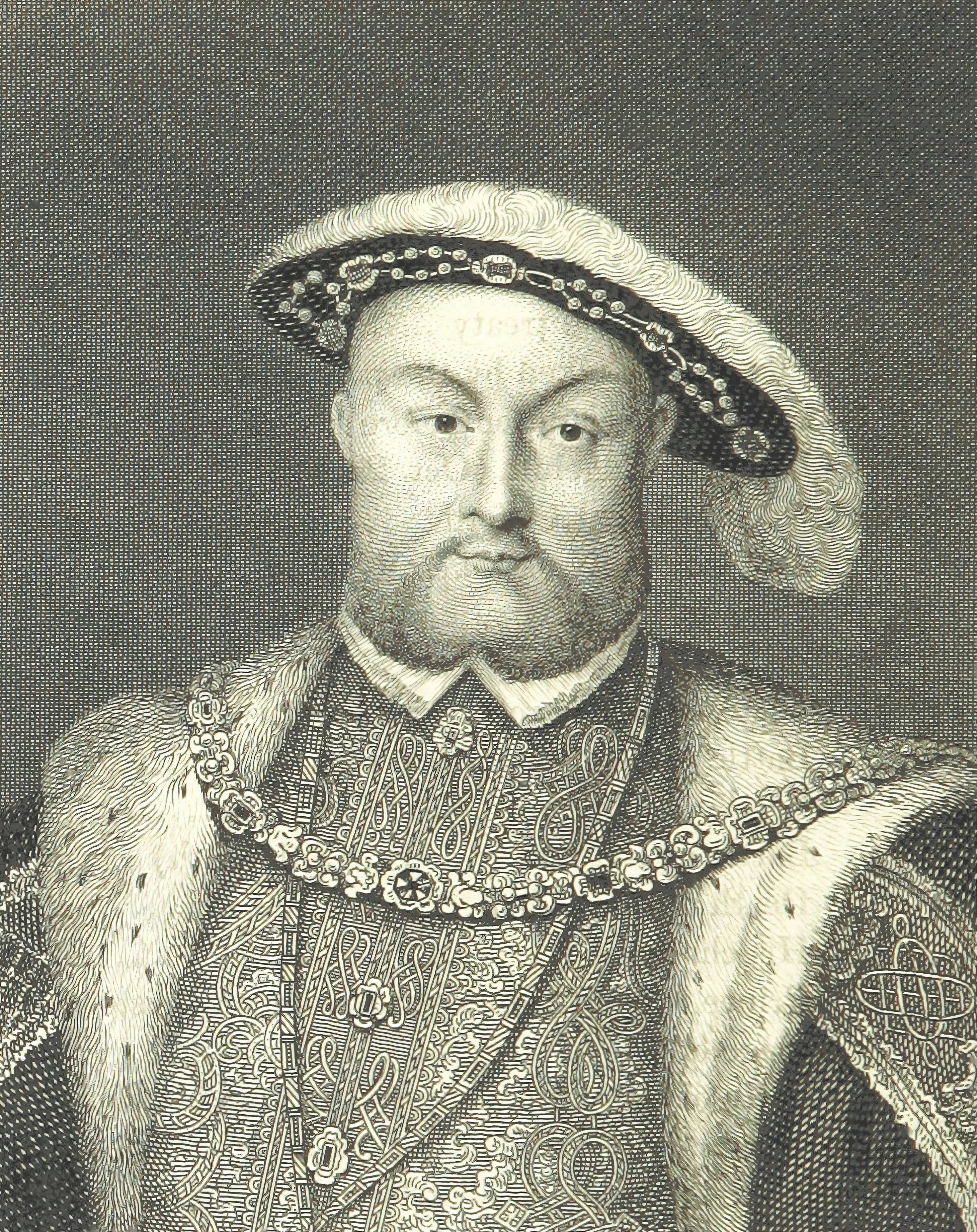
King Henry VIII – Source: British Library
Humble beginnings of Thomas Cromwell
Around the 1500s in Putney, England, a boy named Thomas Cromwell goes out fighting against other boys. To punish him, his father Walter Cromwell creeped up behind him and knocked him over. When Thomas fell down unconscious, Walter beat him so bad that he became unrecognizable. When he managed to stand up, knowing that his father will come after him when he had had a skinful, Thomas went to borrow money from his sister and her husband and fled abroad to Calais, where he enlisted in the French army as a paid soldier fighting in the war. After the war, he remained in Europe to conduct more lucrative trading activities. He spent significant time in Florence, Italy where he practiced law and developed tremendous banking skills.
Where else had he been? No one knew for sure. Thomas Cromwell was now back in England working as a staffer under Cardinal Wolsey, the all-powerful papal legate of England and Master Secretary at the court of king Henry VIII.
King Henry VIII and queen Katherine of Aragon lived in vain the hope for a male heir
The king of England Henry VIII had been married to queen Katherine of Aragon (Catalina) a princess from the family of Emperor Charles V of Spain for 18 years. Katherine was betrothed to Arthur, the brother of Henry who died and paved the way for Henry to wed Katherine. Six times, Katherine, the king, and all England lived the hope for an heir. But they all breathed only few days. Their first child Princess Mary lived, but as a girl she was deemed unfit to rule. King Henry confessed to Cardinal Wolsey that his 18 years of marriage was to be annulled, because he realized that his deceased brother Arthur had consummated his marriage with Katherine and because the marriage was consummated, Katherine lied to him, so Katherine was his sister and he needed Pope Clement’s dispensation to annul his marriage and expiate this 18 years sin.
Cardinal Wolsey failed to secure dispensation from Pope Clement to annul king Henry VIII’s marriage – Fall from grace of Wolsey
Cardinal Wolsey was the Master Secretary of England and papal legate. He first failed to rally European allies around the king’s intent to get a dispensation from Rome to annul his marriage with queen Katherine. In England, Wolsey held a legatine court hearing presided by Cardinal Campeggio from Rome on the matter of king Henry’s attempt to annul his marriage.
Whereas the king doubled down his claim that when queen Katherine came to him, she was not a virgin, having consummated her marriage with his brother Arthur, Katherine contented that she was a virgin when she married the king. Cardinal Campeggio implored Katherine to bow to the king’s will, accept that her marriage was invalid and retire to a convent, to which she objected unless the king becomes a monk.
Cardinal Wolsey failed to get the dispensation for king Henry. The king’s council proceeded to move writs against the Cardinal and charged him with the violation of the statutes of praemunire, meaning that he asserted a foreign jurisdiction in the king’s realm, by exercising his role as papal legate. Wolsey was stripped of everything: wardrobe, jewels, documents, and the Great Seal of England and put under house arrest at Escher a remote deserted property with a complete sign of ill keeping. He later died of illness, which appeared to be poisoning.
A local English court hearing presided by Dr Cranmer the king’s new archbishop was held to annul the marriage. Queen Katherine, now demoted to Dowager of Wales, declined to attend the hearing. The marriage was pronounced invalid and Katherine put under house arrest up-country at Hertfordshire.
Thomas Cromwell, then a staffer under Wolsey wept, bowed his head and prayed for light. He had just lost his wife Liz and two daughters to the plague within a few months apart. Cromwell realized that his situation was bleak and he nearly lost everything: family, his master, and the prospect of success. He needed to do something. Thomas decided to go make a place in the Parliament: he meant to make or mar.
The rise to power of Thomas Cromwell: A courtier without equal
Key character traits of Thomas Cromwell, the accomplished courtier
The following facts describe the character traits that contributed to make him the most powerful courtier of England, whom all Europe talked about:
He was cultivated and well-read
o He knew by heart the whole New Testament in Latin and was always ready with a text to confront abbots when they flounder.
o He quoted nice points from old authors such as Plato, Erasmus, Marsiglio of Padua, Nicollo Machiavelli, etc.
He was very knowledgeable of the law, adroit at manipulation it, and versatile
o His manner assured whether he was at home, in the courtroom, or at the waterfront.
o He could draft a contract, train a falcon, draw a map or stop a street fight, furnish a house and fix a jury.
o He was the man to cut through some legal entanglement that’s ensnared you for three generations.
He worked very hard
o He worked all hours, first up and last to bed, approximatively 18 hours per day.
o He relied on to-do lists to keep track of the king’s various affairs.
He was generous and cared for his kinfolk and friends
o He made money and spent it. He will take a bet on anything.
o Cromwell was generous. He had beer and bread sent to the crowd standing at the gate of Austin Friars, his house, and broth delivered to them as the morning got sharper.
o Cromwell took great care of his kinfolk. He built houses for his male children and arranged advantageous marriages for all the girls living under his guardianship.
He was very persuasive
o He could talk your sniffling daughter into the marriage she swears she will never make
o Nobody can outtalk him if he wanted to talk.
o He was the very man for telling your tenants twelve good reasons why their rent is fair.
He was an astute businessman, a skilled trader, and an intelligent investor
o He can converse you about the Ceasars or get you Venetian glassware at a reasonable rate.
o Nobody can better keep his head when the market was falling and weeping men were standing in the street tearing up letters of credit.
o With animals, women, or timid litigants, he was gentle, but could make your creditors weep.
He was methodic and organized
o He took notes of the names and abilities of everyone he interacted with: e.g. dress a salad, play a drum, say Pater Noster, etc.
o He liked to interact with people, study their faces, ask them questions which prompted them to think deep and understand their abilities.
o His mind was peopled with imaginary images, which allowed him to cast thousand plays and interludes when he tackled challenges.
He mastered his emotions, possessed self-control and temperance, and was fearless
o Cromwell was not subject to the vagaries of temperament.
o He could shape the events, mold them. He could contain the fears of other men, and give them a sense of solidity in a quaking world.
Cromwell’s introduction to king Henry VIII and diatribe against monks
After the fall of his master Cardinal Wolsey, Cromwell managed to become a burgess at the Parliament, where he turned out to be an eloquent speaker. He was then introduced to king Henry by other courtiers. When he met with Henry, he did not miss the opportunity to knock his socks off. He convinced him that England did not possess the financial means to afford a war. He showed the king his knowledge of politics and trade in Europe and waging wars.
Cromwell went on to engage in a virulent diatribe against the monasteries, told the king that monasteries were not well governed. They were fraught with waste and corruption. He said he had seen monks live like great lords on the offerings of poor people. Instead of being repositories of learning, the monasteries subjected children to servitude and abused them. He said he cannot stomach their hypocrisy, fraud, idleness, their worn-out relics, their threadbare worship and lack of invention; they only repeat and what they repeat was corrupt. To him, the monks had distorted England’s history to favor Rome and he was convinced that they could make good use of the monasteries’ money that flowed yearly to Rome.
How Cromwell was sworn into the king’s council: Interpretation of Henry’s haunting dream
One day after midnight, the king sent for Cromwell to report at his Greenwich property. When they got there, the king explained that his deceased brother Arthur came to him in a dream. He stood and looked at him. Arthur was so sad to seem to say that he took his place, that he had taken his kingdom and used his wife. He said that Arthur came back to make him ashamed.
Henry was shaken by this dream. To calm him down, Cromwell explained to the king that his brother meant to tell him to become the king that he would have been. Arthur himself could no longer fulfill the prophecy, but he willed it to Henry. For Arthur, the promise, and for the king, the performance of it. Now, it was time for Henry to become the ruler he should be and to be the sole and supreme head of the kingdom of England. The interpretation of the dream soothed Henry and relieved him of his worries. Impressed by Cromwell, Henry slowly smiled and said: Very well, I see I understand it all now. When he dismissed them, it was four o’clock in the morning. Later that day, Cromwell was called back to Greenwich into a paneled chamber of councilors. The king said to him, radiant: the council is waiting. Go and join them. They will give you your oath.
Thomas Cromwell swore to give faithful counsel, in his speech to be plain, impartial, in his manner secret, in his allegiance true. He swore to uphold the king’s authorities. His preeminence, his jurisdictions. He swore to uphold his heirs and lawful successors.
Cromwell devoted his talent to serve king Henry VIII
The king favored Cromwell, who continued to rise in power. The king appointed him Keeper of the Jewel House. From there, he could take an overview of the king’s income and outgoings. Cromwell now saw the king every day. If Henry wants advice, he can give it. Or if the subject is outside his remit, he will find someone else who can. If the king has a complaint, he will say leave it to me. If the king is in a good humor, he is ready to laugh, and if the king is miserable, he is gentle and careful with him. The king sees him in private; he prefers his nobles not to know how often he consults with Cromwell.
Cromwell concerned himself solely on Henry’s kinship and his role as the ruler of England and the head of the church. He did not want to meddle with the king’s sexual escapades with the women at the palace. The king moved on to appoint Cromwell Master Secretary of England, despites the fact that he was a low-born son a of an ill-reputed blacksmith.
Cromwell’s wealth and generosity
Cromwell accumulated significant wealth. His place Austin Friars had become a large room filled with light. The clock. A new chest from Flanders with carving of the birds and flowers. Paintings, lutes and books of music, a mirror, an ivory comb. He was throwing money at the London goldsmiths and mercers so the women at Austin Friars were bywords among city wives who said behind their hands, with a worshipful murmur, almost a genuflection: Dear God, Thomas Cromwell, the money must be flowing in like the grace of God.
Cromwell possessed two manors in Kent, he was buying another in Essex, eyeing others in Hackney and Shoreditch and the king just gifted him one in Monmouthshire. Those who wanted access to the king expected to pay for it, and no one had better access than he. Help Cromwell and he will help you. Be loyal, be diligent, be intelligent on his behalf; you will come into reward. Those who committed their service to him were promoted and protected.
Despite his wealth and rising status, he was frequently subject to abuses. They said that his father was a blacksmith, a crooked brewer, he was an Irishman, he was a criminal, he was a Jew. He was a wool-trader, a shearsman, and now a sorcerer. Who else but a sorcerer would get the reins of power in his hand?
The king marries Anne Boleyn
On 1521 a lady, Anne Boleyn of about 22, appeared at the court during a Christmas party. She was the daughter of a diplomat Thomas Boleyn. She grew up overseas and spoke French, betrothed at some point to Harry Percy from Northumberland. The king opposed the marriage because he had his eyes on her. Henry took interest in Anne and the pair vowed to ride over hell to marry.
In January 25, 1533, in a chapel at Whitehall, king Henry VIII and Anne Boleyn took their vows of holy matrimony to confirm the contract they had made to get married. That happened almost in secret with no celebration and just a huddle of witnesses.
Anne got pregnant by the king and the news of her happy state spread to all over Europe.
Meanwhile, Pope Clement ruled that Henry’s marriage to Anne was void. He will excommunicate him if he did not return to Katherine. Christendom will slough him off, body and soul, and his subjects will rise up and eject him into ignominy and exile. No Christian hearth will shelter him, and when he dies his corpse will be dug with animal bones into a common pit. Cromwell advised Henry to shrug off the ruling and referred to the Pope as the bishop of Rome and laugh when his name was mentioned.
Queen Anne’s coronation and failure to produce a male hair
In preparation for the procession of the coronation of Anne Boleyn, Cromwell supervised major projects, including the renovation of the Tower, where he persuaded the foremen to keep their men working through frost and rain.
Four days for Anne’s coronation, Day one and two being the apogee
Day one: fifty barges in procession to the tower. Boats packed with hundreds of musicians. Aquatic dragons spitting fire accompanied by men throwing fireworks. Ships discharging their ordinance in salute. By the time she reached the Tower, the sun was out and the Thames ablaze. The king was waiting to greet Anne when she landed. Radiant!
Day two: Anne was brought to Westminster. Her procession was led by a retinue of ambassadors, judges, knights, and bishops. Sixteen people hand carried Anne in a white litter with silver bells, which rang at each step. Ladies on palfreys trapped with white velvet, and ancient dowagers in their chariots. Everywhere were pageants, gifts of gold from city coffers, recitations of their virtues, her falcon emblem crowned and entwined with roses and blossoms.
The pregnant Anne was mantled in purple velvet edged with ermine. She walked to the altar to lie face down and got back on her feet to get crowned by Archbishop Cranmer in a dense cloud of incense. Anne sat with an ivory specter in her hands and briefly wore the crown of St Edward. The nobility of English worked through twenty-three dishes. So many fountains flowed with wine that it was hard to find one flowing with water.
Automn 1533, Anne gave birth to a baby girl. The king, mortified by the child’s gender, took the blow perfectly. Barely able to disguise his shaking voice, he asked: Healthy? “Then I thank God for his favor to us; as I thank you, my lords, for this comfortable intelligence.” As the king walked away, he said: “Oh! Call her Elizabeth. Cancel the jousts.” The king retired in his chambers to “mourn” the news. To console him, a courtier said: “The queen is strong and her family is fertile. You can get another child soon. And perhaps God intends some peculiar blessing by this princess.”
The key tenants of England reformation
Cromwell continued to frame the tenets of the power of England’s monarchy as he prefaced this: This realm of England is an Empire, and so has been accepted in the world, governed by one Supreme Head and King. He believed that all English people wanted was good authority, one they can properly obey. That authority was the English king, who will exercise his powers under Parliament and all under God’s blessing.
Cromwell studied Marsiglio of Padua, who made forty-two propositions in 1324, and went on to propose sweeping reforms for England to the king:
When Christ came into this world, he came not as a ruler or a judge, but as a subject: He did not seek to rule, nor pass on to his disciples a mission to rule. He did not give power to one of his followers more than another. Christ did not make Popes. He did not give his followers the power to make laws or levy taxes, both of which churchmen have claimed as their right.
The prince gets the power to make laws or levy taxes, and his power to enforce it, through a legislative body, which acts on behalf of the citizens. It is from the will of the people, expressed in Parliament, that a king derives his kingship.
Christ did not bestow on his followers grants of land, monopolies, offices, promotions. All these things are the business of the secular power. For a man who has taken vows of poverty, how can he have property rights? How can monks be landlords?
Henry tasked Cromwell with drafting and passing sweeping reforms at the parliament, which some of the key tenets were:
Act of Supremacy
It was time for England to assume her capacity for self-rule. It was time to say what a king is, what trust and guardianship he owes his people, what protection from foreign incursions moral or physical, what freedom from pretensions of those who would like to tell an Englishman how to speak to his God. The Act of Supremacy draws together all the powers and dignities assumed by the king to declare him the head of the church.
Enactment of the scope of treason
A second enactment came into force, which defined the scope of treason. It will be a treasonable offense to deny Henry’s titles or jurisdiction, to speak or write maliciously against him, to call him a heretic or a schismatic.
Severance of ties with Rome, Valor Ecclesiasticus
The king gave Cromwell a title, which no one had ever held before: Viceregent in Spirituals, his deputy in church affairs. Cromwell was tasked with the following: break the bishops and make the king head of the church and take away their revenues from the Holy Father and give them to Henry.
Cromwell had the power to visit and inspect the monasteries to perform as follows:
Assess the wealth of the church, clergy and monasteries, – Valor Ecclesiasticus
Reform monasteries to affirm Henry as the supreme ruler of the church, with the clergy to become the king’s subjects and bishops no longer taking an oath to obey and support the Pope.
Break the resistance of the bishops to Henry’s new order
Bring their assets under his control and put in place a legislation that will cut revenues to Rome
The legislative to provide for the maintenance of bishops and priests and use the rest of the church’s colossal wealth for the public good.
Sola Scriptura – by Scripture alone
Cromwell’s reformation questioned the roman catholic tenets, shrines, and practices: purgatory, saints, veneration of sacred objects. The reform posited that Christ taught us how to remember him by leaving us bread and wine, body and blood. What more else did we need? Where was it asked for shrines to be set up, or instituted a trade in body parts, in hair, and nails, or asked to make plaster and worship them? This question summed it up: Show me where it says, in the Bible, Purgatory. Show me where is says relics, monks, nuns. Show me where it says Pope.
A Collateral victim of the England reformation: Thomas More (now a catholic saint)
Besides Cardinal Wolsey and numerous nuns, priests, and monks, there was another major figure who fell victim to the England reformation. Thomas More, who is now a catholic saint.
Thomas More was, a respected scholar in Europe and the Lord Chancellor of England. His opinions were fixed and impervious to arguments. He spent his life reading, writing, talking about what he believed was the Christian commonwealth under one, undivided, and universal church headed by Rome. It was said that Thomas More spent significant time persecuting heretics. More regarded Cromwell as in infidel conspiring with Luther and the Germans or some heathen god or English deity. He firmly opposed the king’s marriage annulment.
More was later required to swear to the Act of Supremacy, an act which declared the king the head of the church. More refused to take the oath arguing that his conscience advised him against it. The king directed Cromwell to introduce a bill of attainder against More. More was indicted for treason, trialed, declared guilty, and condemned to death by beheading.
On the day of his execution, a stoic More made some quip to the headsman, knelt at the block, and said his final prayer. At the sickening sound of the ax, his head and corpse flew asunder. More’s trial was the arm wrestling of England against Rome. Rome and More appeared to have lost to England.
Reflection & Insights
1. The England Reformation: Religion, politics, and economic interests: a mixed bag of writhing double-headed serpents. Religious zealots, think again!
This fateful quest for a male heir to the throne of England morphed into the reformation movement. Beyond the game of blaming queens for their incapacity to produce an heir to the throne, the reformation offered a stage for religion, politics, and economic interests to intertwine in the 1500s Europe as a bag of writhing double-headed serpents, capable to biting on either side. Some religious zealots may think that this was only about England against Rome, Protestant Reformation against Catholicism, but a careful analysis reveals that geo-politics and economic interests were at stake between European powers (France, Germany, Spain, Rome, etc.).
On one hand, the Reformation promoted Sola scriptura – by the scripture only – as opposed to catholic values and traditions. But obviously through monasteries, the catholic church owned about the third of England. The English monarchy was envious of the colossal fortune that the clergy had, along with all the funds that were funneled into Rome. Through the Reformation, England found the subterfuge needed to redirect that wealth to fund its national interests. On the other hand, if the clergy did own about the third of England, how did they accumulate such wealth? Was that wealth necessary for spreading the gospel in England?
And guess what! On October 2025, King Charles III of England traveled to Rome to meet with Pope Leo XIV to pray together and seal the reconciliation after nearly 500 years since they cut ties during the Cromwell reformation.
So, whether you are Catholic or Anglican, I’d suggest zealots to curb their zeal and show humility, because this was not only a matter of faith. It was mainly about politics and economic interests.
2. The key traits of the accomplished courtier: Anatomy of people who rise to take a seat in the countinghouse
According to Robert Greene in his seminal book the 48 Laws of Power, if the world is like a giant court and we are trapped in it, there is no use in trying to opt out of the game of power. That will render us powerless and miserable. Instead of trying to evade and escape the power game, it is far better to exert ourselves to excel at the game. Throughout Wolf Hall, various key character traits were displayed by Thomas Cromwell to tame the power and become the greatest courtier in the history of England. As social animals interacting with others in society, we ought to develop some of the following key character traits, which helped him get invited to the countinghouse:
Cromwell was well-read: he knew the New Testament by heart, and he quoted great thinkers such as Plato, Marsiglio of Padua, Erasmus, Castiglione, etc.
He was an astute lawyer and skilled with testing words to find their utmost power.
He worked long hours, about 18 hours a day to draft contracts and direct the king’s various affairs
He was generous: his affairs minted a ton of money, he lived lavishly, but he gave money away and made sure his kinfolk were taken care of.
He leveraged a network of friends inside England, at the palace, and throughout Europe to gather the intelligence necessary for making informed decisions.
He cultivated courage, was cunning and ruthless when taking on his opponents and peer courtiers, and he exercised temperance.
So, if you desire to go up the later, grub more power, and get a seat in the countinghouse, work hard, read voraciously, develop emotional intelligence, network and gather intelligence, and be generous.
Personally, I strive to be bookish and well-read by reading books from great thinkers to keep testing my mental fitness. Which one is your favorite character trait?
3. Why England seems to be so superstitious and gossipy?
This book is littered with gossip and superstition mainly around the British monarchy.
Superstition about the princes
Stories have been put about that Anne’s child was born with teeth, has six fingers in each hand, and is furred all over like a monkey, so her father (the king) has shown her off to the ambassadors, and her mother is keeping her on display to counter the rumors.
The serpent queens of England, black-fanged and haughty, dragging their blood-soaked linen and their crackling skirts. They kill and eat their own children; this is well-known. They suck their marrow before they are even born.
The wives of England, they all keep secret books of whom they are going to have next when they have poisoned their husbands. And you (Cromwell) are the top of everyone’s list.
The royals’ intimacy and sex life is exposed:
All Europe talked about Katherine and what body part was put where, was she penetrated and if she was, did she know?
One courtier reported: Harry’s leg pains him at night. He is afraid the queen will kick him in the throes of her passion. When the queen lies still under the king he says, what madam, are you so little interested in making my heir? She says she gets no pleasure with him. The king said he fought seven years to get her, he can hardly admit it has stalled so soon. So, between the kicking and sore leg, and the luck of prowess, and her lack of desire, it will be a wonder if we ever have a Prince of Wales?
I understand why until today tabloids continue to thrive and roil Londoners and the world with the lives of the British crown. However, I wonder how the country of eminent thinkers such as Isaac Newton and Adam Smith can be so gossipy and superstitious?
Character Growth Takeaways
Wisdom: [Scattered wisdom from the book to ponder over]

The world in not run from fortresses. Not even from Whitehall (the king’s palace). The world is run from Antwerp, from Florence, from Lisbon where the ships with sails of silk drift west. Not from castle walls, but from countinghouses, not the call of the bugle, but by the click of the abacus, not by the grate and click of the mechanism of the gun, but the scrape of the pen on the page of the promissory note that pays for the guns.
The wise prince exterminates the envious. The wise prince is not the most popular. (Niccolo’s book)
Unarmed prophets always fail. (Niccolo’s book)
There is an art to being in a hurry but not showing it.
When you make a king cry, know that it’s time to back off.
When you are writing laws you are testing words to find their utmost power. Like spells, they have to make things happen in the real world, and like spells, they only work if people believe in them.
If your law exacts a penalty, you must be able to enforce it on the rich as well as the poor.
You don’t get on by being original. You don’t get on by being bright. You don’t get on by being strong. You get on by being a subtle crook.
Try always to learn what people wear under their clothes, for it’s not just their skin.
Choosing a wife is like putting your hand into a bag full of writhing creatures, with one eel to six snakes. What are the chances you will pull out the eel?
Bishop Fisher has said in court that no power, human or divine, could dissolve the marriage of the king and queen. To Cromwell, if there’s one thing he’d like to teach Fisher, it’s not to make grand overstatements. Cromwell had an idea of what the law can do, and it’s different from what Bishop Fisher thinks.
Sometimes it is weak to be anecdotal. It is wise to conceal the past even if there is nothing to conceal.
A man’s power is in the half-light, in the half-seen movements of his hand and the unguessed-at expressions of his face. It is the absence of facts that frightens people; the gap you open, into which they (people) pour their fears, fantasies, desires.
It is said in the book called the Courtier that in men of base degree, we often see high gifts of nature.
If the lion knew his own strength, it would be hard to rule him.
Leases, writs, statutes, all are written to be read, and each person reads them from the light of self-interest.
The moment is fleeting. But insight cannot be taken back. You cannot return to the moment you were in before.
A part of the art of ruling is to know when to shut your ears.
Deeds of blood. Kings’ game.
To lose gracefully is an art that every gentleman cultivates. – from some French lord
Man is wolf to man.
A gift blesses the giver.
He that maketh haste to be rich shall not be innocent.
All the rivers run into the sea, but the seas are not full yet.
Fortune is inconstant, fickle, and mutable.
The wolf comes down on the sheepfold, but not the nights when the men with dogs are waiting for him.
Temperance: [Lesson about restraint, balance, humility]

The following fact illustrates some level of temperance and self-control
Cromwell is no longer subject to the vagaries of temperament, and he is almost never tired. Obstacles will be removed, tempers will be soothed, knots unknotted…His spirit is sturdy, his will strong, his front imperturbable. The courtiers see that he can shape the events, mold them. He can contain the fears of other men, and give them a sense of solidity in a quaking world: this people, this dynasty, this miserable rainy island at the edge of the world.
Prudence is a virtue. But they are other virtues that belong to princes.
Courage: [Lesson about strength, risk, or standing up]

In Italy, Thomas Cromwell made a bet to pick up a snake and people counted until ten. He picked up the snake and they counted very slow. The snake coiled his head and bit him. He waited until the count was over, dropped the snake which slid away. Then, he collected his winnings and waited to die, but he did not die. Instead, he got stronger and got the reputation of being the quickest to hide and strike.
Fortitude. It doesn’t mean courage in battle. It means fixity of purpose. It means endurance. It means having the strength to live with what constrains you.
Justice: [Lesson about fairness, integrity, or responsibility]

An act of justice from the book:
Cromwell often took a stand in Parliament to defend the cause of the poor and needy in England.
Memorable Quotes & Phrases
Memorable Quotes from the Book:
As rare as apple blossom in January
In England there is no mercy for the poor. You pay for everything, even a broken neck. (on the scaffold people sentenced to death still needed to pay a fee to the hangman, so they can make it swift and quick or they may suffer longer)
Snuggled to the bosoms of whores, slack breasts rubbed with rose petals and ambergris
A king is obliged to be gallant, till he reaches the age when he puts on his long gown and sits by the fire with his chaplains.
Lock Cromwell in a dungeon in the morning, and when you come back that night, he’ll be sitting on a plush cushion eating larks’ tongues, and all the jailers will owe him money.
Beyond the gate, cries and shouts, London never still or quiet; so many in the graveyards, but the living parading in the streets, drunken fighters pitching from London Bridge, sanctuary men stealing out to thieve, Southwark whores bawling out their prices like butchers selling dead flesh.
When a man gets a son, he takes all the credit, and when he gets a daughter, he blames his wife. And if they do not breed at all, we say it is because her womb is barren. We don’t say it is because his seed is bad.
The making of a treaty is the treaty. It doesn’t matter what the terms are…just that they are terms. It is the goodwill that matters. When that runs out, the treaty is broken.
He will drag you out from whatever hole you are cowering in and bite your bollocks off.
The English will forgive a king anything until he tries to tax them.
If I ever see him again, I will chew him up bones, flesh, and gristle.
There are some people in the world who like everything to be square up and precise, there are those who will allow drift at the margins. He is both these kinds of persons.
Vocabulary Builder
Words, phrases, and expressions from the book to season and spice up your language
Addle-witted: confused, muddled, or unable to think clearly
Tax her wits: to severely strain, exhaust, or put a heavy burden on her intelligence, mental faculties, or capacity to think quickly
Double-bluff: Action or statement that is intended to appear as a bluff but is in fact genuine
Make or mar: a decision, action, or factor that will either lead to great success (”make”) or cause complete ruin and failure (”mar”)
Make hay: Make good use of an opportunity; use a situation to one’s advantage
Hedge your bets: avoid committing oneself when faced with a difficult choice
A skewering glance
Bill of attainder: legislative act that declares a specific person or group guilty of a crime and imposes punishment without a judicial trial
Give someone the slip: evade or escape from someone
Have a skinful: drunk or intoxicated by alcohol
Who Should Read This?
People advising presidents, rulers, or leaders
Decision and policy makers
Everyone who wants to sharpen his/her skills on power dynamics